 Wei Zhang
Quick Navigation
I’ve been guiding travelers around Lhasa for years, and Jokhang Temple is always the highlight – but also the place where I see the most frustrated tourists. Long queues, confusing ticket systems, and altitude sickness hitting at the worst moment. So let me walk you through everything you need to know to have a smooth, respectful, and memorable visit.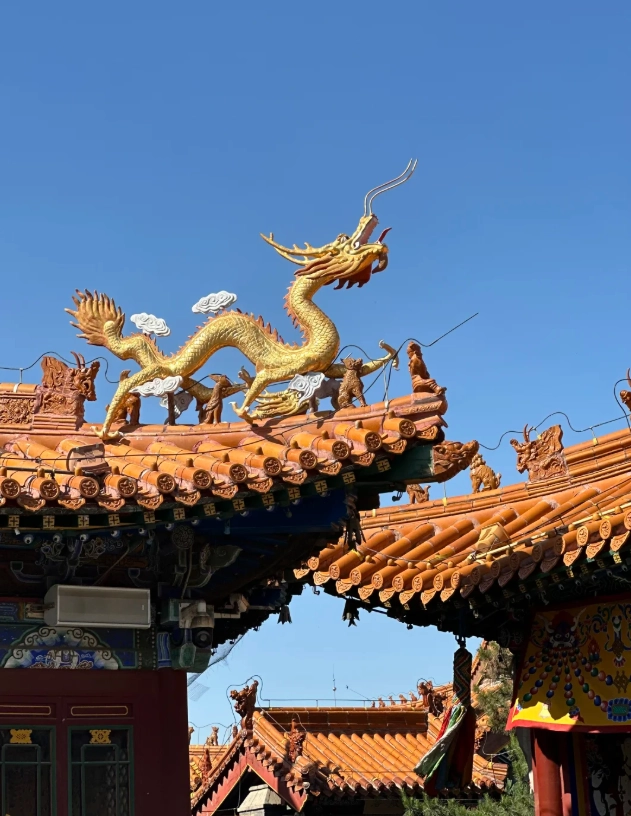
Why Jokhang Temple?
Jokhang Temple is the spiritual heart of Tibet. Built in the 7th century, it houses the Jowo Shakyamuni statue – the most revered Buddha image in Tibetan Buddhism. Pilgrims travel from all over the plateau to prostrate before it. For visitors, it’s a living museum of Tibetan art, architecture, and devotion. You’ll see monks chanting, butter lamps flickering, and locals doing kora (circumambulation) around the temple day and night.
Best Time to Visit Jokhang Temple
Lhasa is cold in winter (0–10°C) but with fewer tourists. Summer (June–August) is peak season – warm but crowded. Spring and autumn (April–May, September–October) offer mild weather and manageable crowds. Tibet's major festivals (like Saga Dawa in May/June) bring huge crowds and special rituals – fascinating but chaotic.
I personally recommend late afternoon (3:00–5:00 PM) for the best balance of light and crowd. The temple closes at 6:00 PM (last entry 5:30 PM), so you have a good two hours.
How to Get Tickets (Avoid the Hassle)
Here's where many travelers slip up. Jokhang Temple requires a physical ticket – you can’t just walk in. And they limit daily visitors.
Ticket Price & Purchase
| Category | Price (RMB) | Notes |
|---|---|---|
| Adult | 85 | Foreigners must show passport |
| Child (under 1.2m) | Free | - |
| Student (with valid ID) | 45 | Only for Chinese students |
| Senior (65+) | Free | Must show passport |
Pro tip: If you’re staying at a hotel in Lhasa, most receptionists can book it for you. Be polite – it’s a 5-minute hassle for them but saves you an hour of frustration.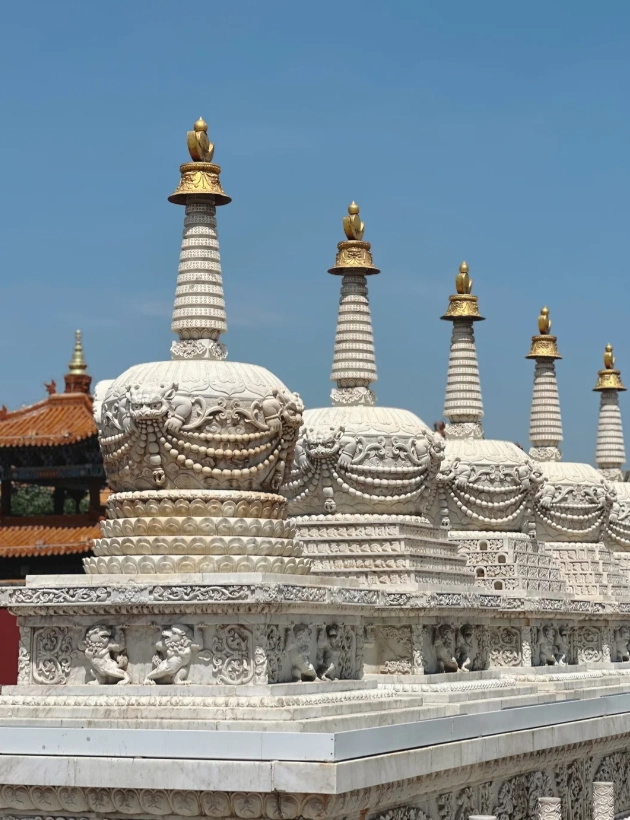
How to Get to Jokhang Temple
Jokhang Temple is in the heart of Lhasa’s old town, on Barkhor Street. It’s pedestrian-friendly but can be confusing for first-timers.
- From downtown Lhasa: A taxi costs about 15–20 RMB. Say "Jokhang" to the driver – they know it. Avoid flagging taxis near Potala Palace during rush hour; they often refuse short fares.
- On foot: From Potala Palace, it’s a pleasant 20-minute walk southeast. Cross through the bustling Barkhor market – you’ll pass prayer wheels and incense smoke. Follow the crowd going clockwise around the temple.
- By bus: Take bus 5, 9, or 12 to "Barkhor Street" stop. Then walk about 5 minutes.
⚠️ Don’t confuse Jokhang with Ramoche Temple: They are similar but different. Jokhang is the big one on Barkhor Street. Ramoche is a 15-minute walk north – also worth visiting but less crowded.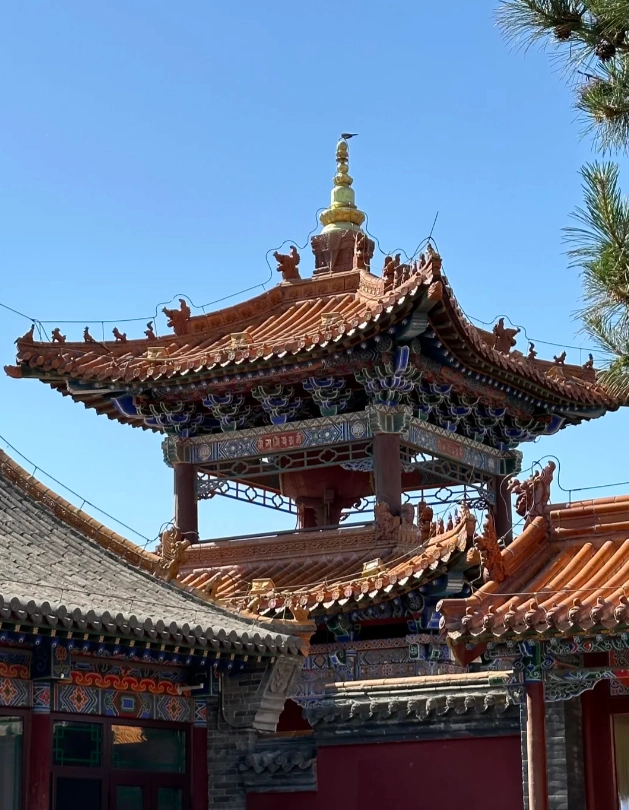
What to See Inside (Don’t Miss These)
Once inside, follow the clockwise circuit. The temple layout can feel like a maze. Here’s what to prioritize:
- The Jowo Shakyamuni Statue: In the main hall (second floor). It’s said to be blessed by the Buddha himself. The line can be long, but it moves. You can offer a khata (white scarf) – buy one from the vendors outside for 2 RMB instead of inside for 10 RMB.
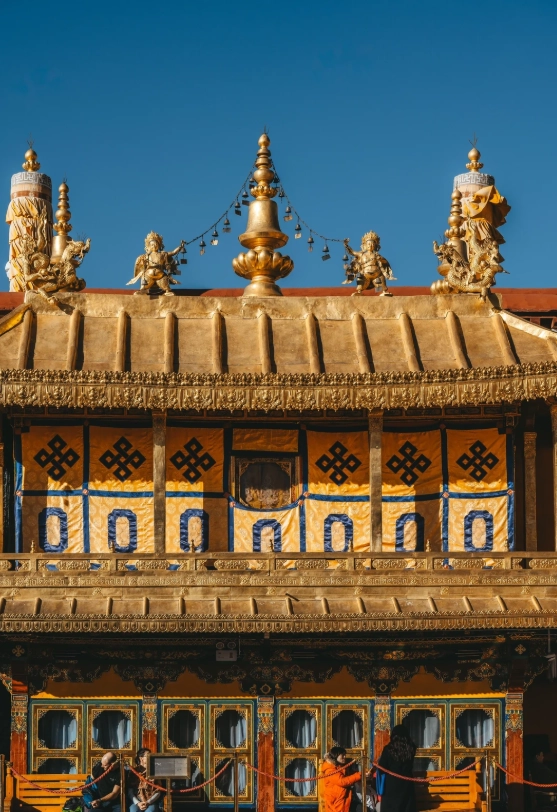
- The Rooftop: Many tourists miss this! Go up to the roof for a panoramic view of Barkhor Street and the golden dhvaja (victory banners). Best photo spot in the late afternoon golden hour.
- Butter Lamp Chapel: A dark room filled with flickering butter lamps. The smell is intense – it’s yak butter. Watch your step; the floor can be slippery.
- Monk chanting room: Usually open around 10:00 AM and 3:00 PM. You can stand at the doorway and listen. Photography is prohibited inside the chapels.
Dress Code & Etiquette
Jokhang is an active place of worship. Dress modestly – cover shoulders and knees. Remove your hat and sunglasses when entering chapels. Turn off flash photography. Don’t point your feet towards Buddha statues. Walk clockwise around the temple both inside and out.
One thing that surprises many tourists: locals will touch your shoulder or hand as they walk past. It’s not aggression – they’re just navigating the tight space. Stay patient and smile.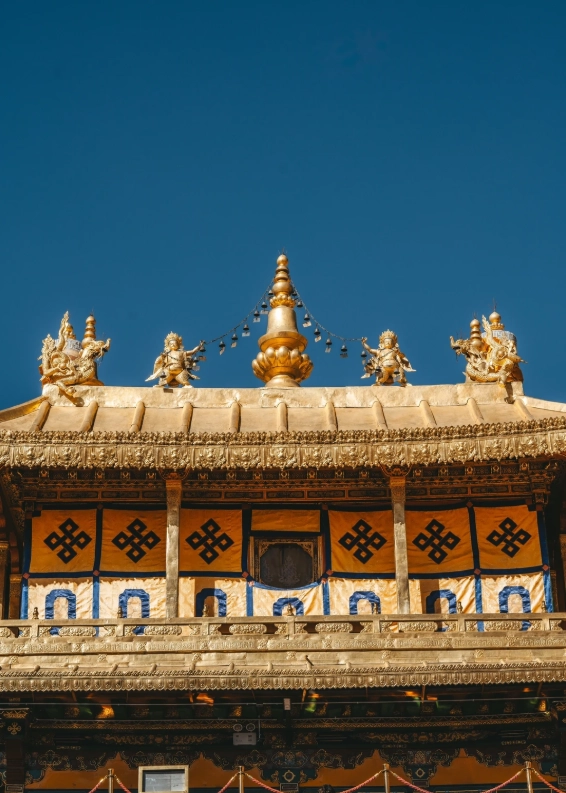
How to Beat the Crowds
The busiest time is 9:00 AM – 12:00 PM, when tour groups flood in. The area outside the temple is also packed with pilgrims doing full-body prostrations. If you’re not a morning person – don’t force it. Come after 2:30 PM. By 4:00 PM, the foreign tour groups have left, and the light is softer.
Another insider trick: Enter through the north gate (side entrance) instead of the main south gate. The south gate gets a bottleneck of people taking photos of the golden wheel. The north gate is less crowded and leads directly to the inner circuit.
What to Do Nearby
After Jokhang, step right into Barkhor Street – the bustling pilgrim circuit. It’s lined with shops selling thangka paintings, prayer beads, and Tibetan jewelry. Bargain hard – start at 30% of the asking price. For a break, try the sweet butter tea at Mingming Teahouse (10 RMB a cup) – it’s an acquired taste but a local staple.
If you have energy, walk 10 minutes to Ramoche Temple – less crowded but equally historic. Or head to Potala Palace the next day.





No comments yet.