 Ting Chen
Let’s get straight to it. If you’re coming to Dali, the Chongsheng Temple Three-Pagoda is on your list. It should be. Those three ancient pagodas against the backdrop of Cangshan Mountain are the postcard shot of Yunnan. But most visitors make simple mistakes—they go at noon when the light is harsh, they miss the best part of the complex, and they leave feeling it was just a quick photo stop.
I’ve guided hundreds of families, couples, and solo travelers here. My job isn’t just to show you the pagodas; it’s to show you how to experience them. To feel the history, get the perfect photo without a hundred strangers in it, and understand why this place mattered. This guide is everything I tell my clients on our way there.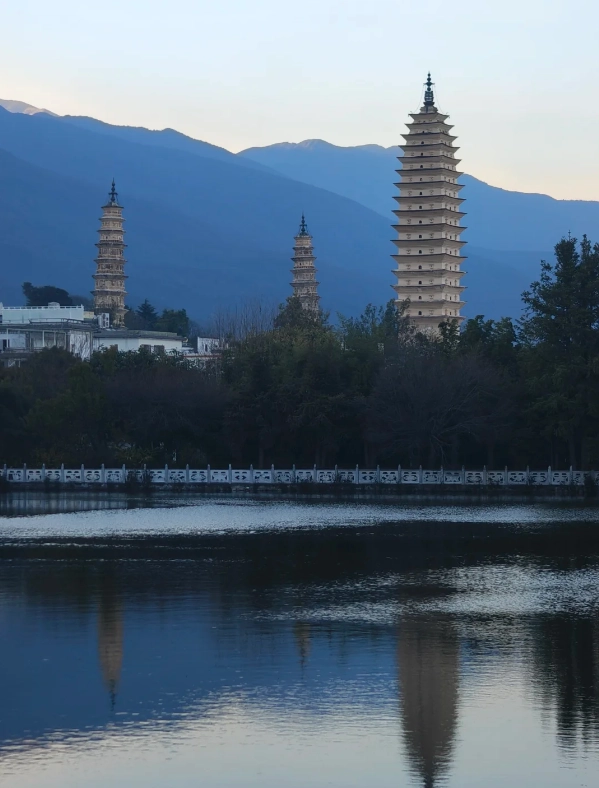
Quick Navigation: What’s Inside This Guide
What to Expect at the Site: More Than Three Towers
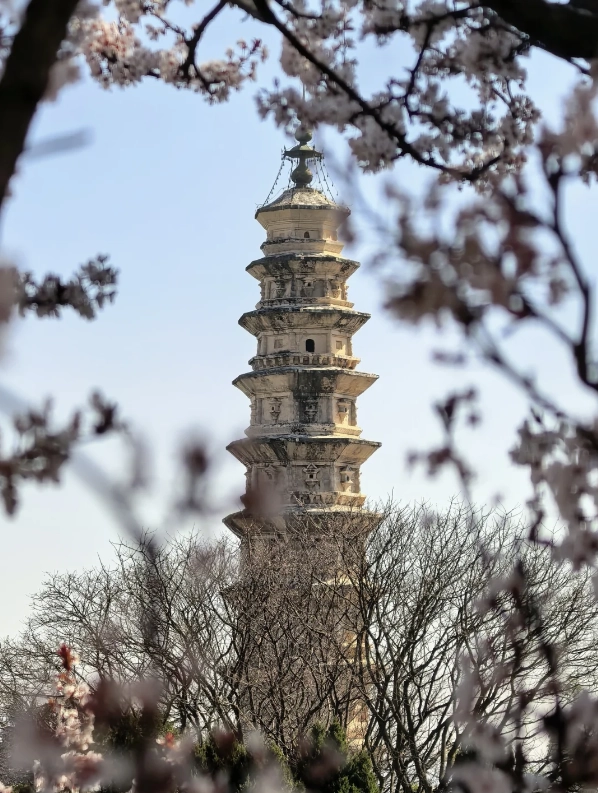
The “Three Pagodas” are the stars, but the site is officially called Chongsheng Temple. The original temple was massive, one of the largest in Asia. Earthquakes and time destroyed most of it, but the three pagodas stood firm. The main temple complex behind them is a modern reconstruction, but it’s done beautifully and houses some incredible Buddhist artifacts.
My On-Site Observation: The central Qianxun Pagoda is 16 stories tall and has a slight lean. It’s not as famous as the Leaning Tower of Pisa, but look closely—you can see it. It’s leaned for centuries, surviving over 30 recorded earthquakes. That’s engineering.
Most people rush from the entrance to the pagoda plaza, snap pictures, and leave. Big mistake. The real magic happens when you walk past the pagodas towards the reconstructed temple halls. The scale is breathtaking, and the view looking back at the pagodas from the higher terraces is even better than the front view.
Allocate at least 2 to 2.5 hours if you want to see it properly. A rushed one-hour visit only covers the pagoda base.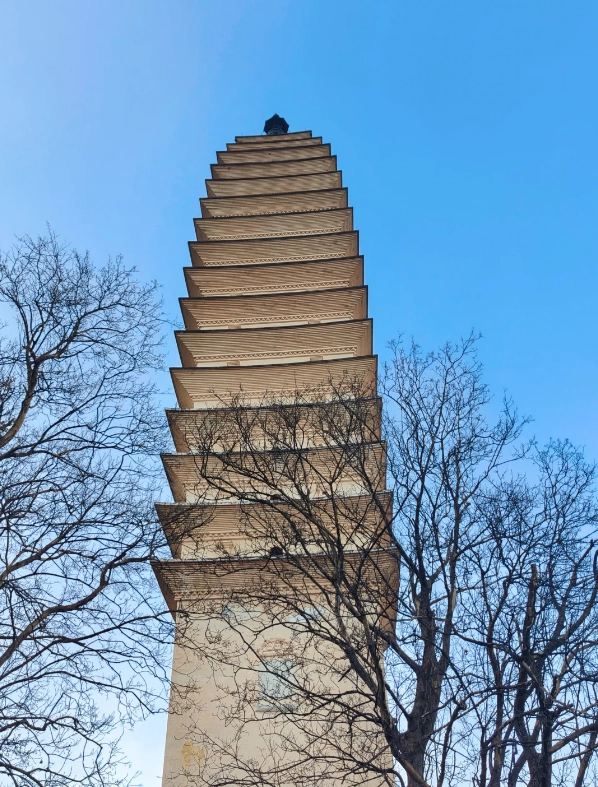
Tickets, Hours & Must-Know Logistics
This is where poor planning ruins a trip. Here’s the exact data you need.
| Item | Details | Guide's Note |
|---|---|---|
| Ticket Price | Adult: 75 RMB. Children 1.2m-1.4m: 37 RMB. Under 1.2m & Seniors 70+: Free (ID required). | No student discount for international students unless you have a Chinese student card. |
| Opening Hours | 07:30 – 19:00 (Last entry at 18:30). Year-round, no seasonal change. | Morning light is best. The 07:30 opening is golden for photographers. |
| Need to Book? | Yes. You must book online in advance via their official WeChat mini-program or platforms like Trip.com. | They often hit daily visitor limits. I’ve seen people turned away at the gate. Book at least a day ahead. |
| Address for Taxi/Nav | Chongsheng Temple, Dali City, Yunnan. In Chinese: 云南省大理市崇圣寺三塔. | Show this to your driver: “崇圣寺三塔”. The main entrance is on the west side. |
| On-Site Facilities | Clean restrooms near entrance & main hall. Small shops sell water/snacks. Limited seating. | Bring a water bottle. The walk from the pagodas to the top temple is uphill and can be warm. |
Payment Heads-Up: The ticket counters might accept cash, but the online booking requirement makes it almost mandatory to have WeChat Pay or Alipay set up. If you’re struggling, book through Trip.com or Klook using an international card, then show the e-ticket QR code at the gate.
How to Get There: The Best Routes from Dali Old Town
Almost everyone stays in Dali Old Town (Dali Gucheng). Here are your options, timed and priced.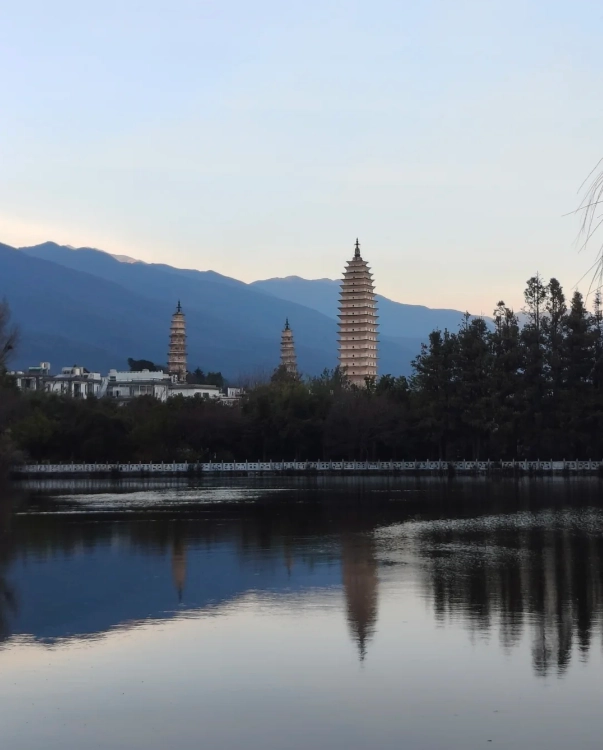
Option 1: Didi or Taxi (My Top Recommendation for First-Timers)
This is the simplest. From the south gate of Dali Old Town, a Didi (China’s Uber) costs about 15-20 RMB and takes 15 minutes without traffic. Ask to be dropped at the “main tourist entrance” (zhengmen). The driver will know.
Pro Tip: After your visit, getting a car back is easy. Walk out of the main exit, turn left, and there’s a dedicated Didi pick-up zone about 50 meters down the road. Don’t wait right at the gate where the tour buses clog everything.
Option 2: Public Bus C10
The C10 bus route runs from Dali Old Town to the Three Pagodas. Look for the bus stop outside the old town’s north gate or along Bo’ai Road. Fare is 3 RMB. It takes about 25-30 minutes. Get off at the “San Ta Lu” (Three Pagodas Road) stop.
From the bus stop, you’ll need to walk about 8-10 minutes north to the main entrance. You’ll see the pagodas, just head towards them.
I only recommend this if you’re on a very tight budget and have plenty of time. The walk at the end isn’t scenic.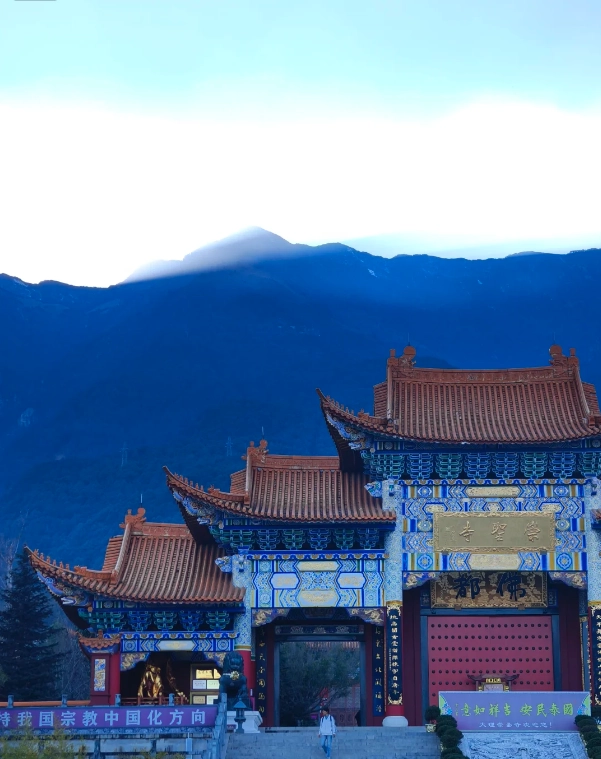
Option 3: Cycling (For a Great Half-Day Adventure)
Rent a bike in the old town (25-40 RMB/day). Cycle north along the road east of the old town walls, following signs. It’s a flat, pleasant ride of about 4.5 km, taking 20-25 minutes.
Big advantage: You have freedom. After the temple, you can easily cycle 10 more minutes to the edge of Erhai Lake. The downside? Parking. There’s unofficial bike parking near the entrance for a small fee (2-3 RMB). Make sure you have a good lock.
The Smart 24-Hour Dali Itinerary Featuring the Pagodas
You have one day in Dali. Here’s exactly how I’d structure it to maximize your time and experience, avoiding the classic tourist traps.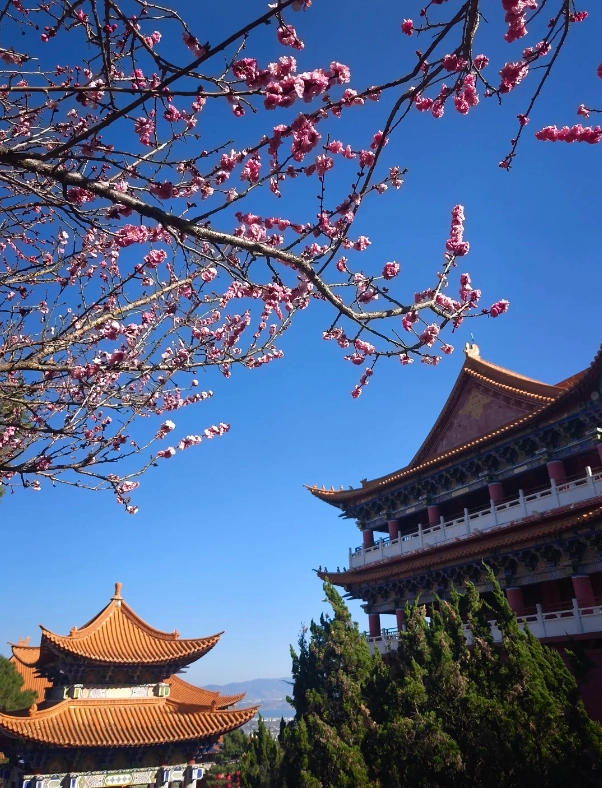
Morning (8:30 AM – 12:30 PM): Beat the Crowds at the Pagodas
- 8:30 AM: Grab a quick breakfast of bing (Yunnan flatbread) from a vendor in the old town. Take a Didi to Chongsheng Temple. Arrive by 9:00 AM. The big tour groups from Kunming usually roll in around 10:30, so you have a golden window.
- 9:00 – 11:30 AM: Explore the complex. Start at the reflection pond for the classic pagoda shot (light is good now). Then move to the pagoda base, and spend most of your time walking up through the stunning reconstructed temple halls towards the back. Don’t rush.
Lunch (12:30 – 1:30 PM): Local Food, Not Tourist Food
Take a Didi (10 RMB) to Zhengyi Road near the old town, not into the most crowded square. Find a restaurant with lots of locals. Order rushan (fried milk fan, a Dali specialty) and a xiangcai (coriander) salad. A filling meal for two should be 60-80 RMB.
Afternoon (1:30 – 5:30 PM): Erhai Lake & Xizhou Village
- 1:30 PM: Didi to Caicun Pier (15 mins, 20 RMB). Instead of an expensive boat tour, walk the lakeside ecology corridor. Rent a shared bicycle (5 RMB/hour) and cycle a few kilometers along the water. The view of Cangshan from here is different and peaceful.
- 3:30 PM: Didi to Xizhou Village (20 mins, 25 RMB). This Bai minority village is less commercialized than the old town. Wander the sidestreets, see the beautiful painted gateways, and try the famous Xizhou baba (a savory or sweet baked bread).
Evening (6:00 PM onwards): Back to Dali Old Town
Return to the old town for dinner. The crowds on Foreigner Street are part of the experience once, but for a quieter drink, head to a rooftop bar on the east side of the old town for a final view of the pagodas lit up at night. They’re beautifully illuminated.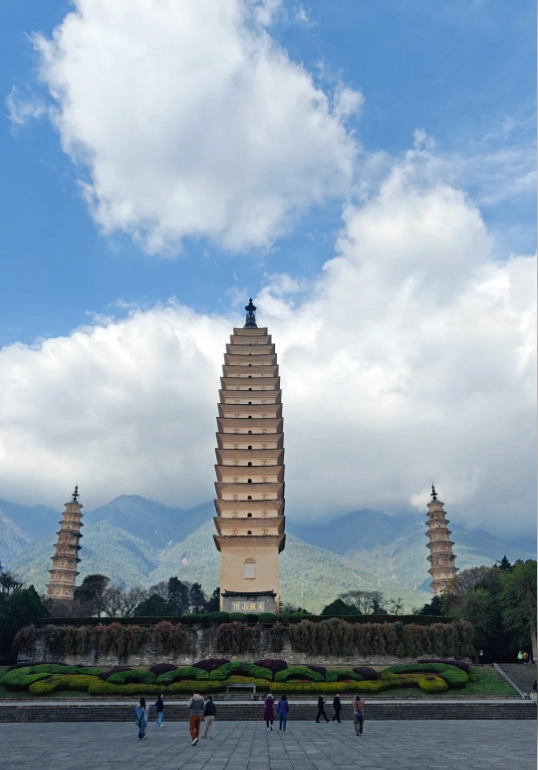
Photography Tips: Getting That Perfect Shot
Everyone wants the same photo. Here’s how to get a better one.
The Classic Reflection Shot: The reflection pond is right inside the entrance. The problem? It’s always crowded. Go as soon as you enter, even before looking at anything else. Later, it’s a scrum. If you miss it, there’s a smaller, less-known pond near the Bell Tower on the north side of the complex. Fewer people know about it.
The Best Light: Late afternoon (after 4 PM) casts a warm glow on the pagodas’ eastern faces. Morning (before 10 AM) gives soft light from the east. Avoid midday. The sun is directly overhead, creating harsh shadows and washing out the details.
The Unique Angle: Walk all the way to the highest hall, the Mahavira Hall. Turn around. The view of the three pagodas framed by the temple roofs below is spectacular and captures the full scale of the site. Most people don’t walk this far.
I once spent an hour with a photographer waiting for the exact moment when a wisp of cloud drifted between the main pagoda and Cangshan. It was worth it. Be patient.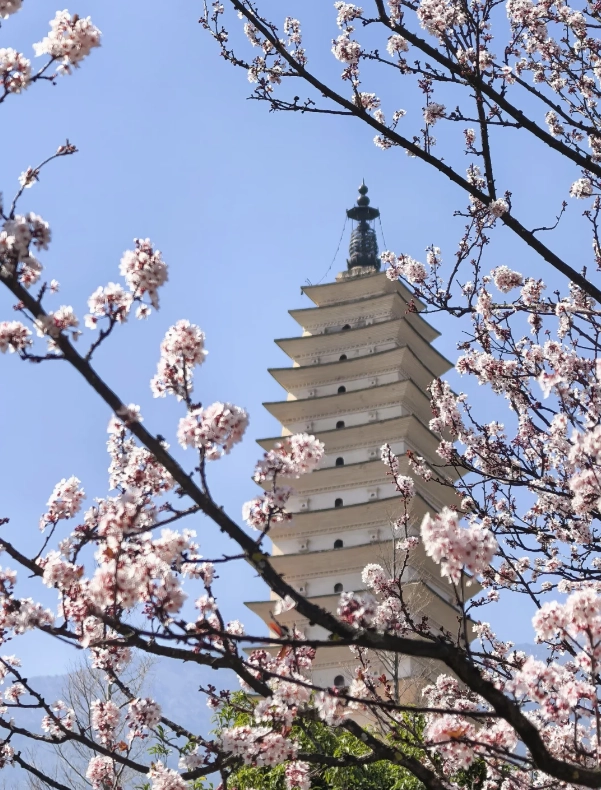
Your Questions, Answered (The Stuff Other Guides Don’t Mention)
 I hope this guide feels like you’ve got a local friend walking you through it. The Chongsheng Temple Three-Pagoda isn’t just a checklist item; it’s the soul of Dali. With a little planning, you can experience its quiet power, not just its crowded facade.
Enjoy your trip. And if you see a guide pointing out the lean in the main pagoda to a small group, come say hello.





No comments yet.