 Lei Li
What You'll Find Here
I've lost count of how many times I've stood at the base of Xuankong Si — the Hanging Temple — watching first-timers fumble with their phones, zooming into a fuzzy screenshot of a map they found online. That map never shows the real shortcuts. After guiding dozens of groups here, I know exactly where the queues hide and which corner gives you that perfect photo without fifty tourists photobombing. So let me save you the headache.
Here is the catch: the official Hanging Temple map you get at the ticket booth is printed in Chinese only, and the English version? It's a photocopy that looks like it survived a rainstorm. By the end of this article, you'll have a mental map that actually works. No more guessing which staircase leads to the cliff, or why your international credit card got declined at the gate.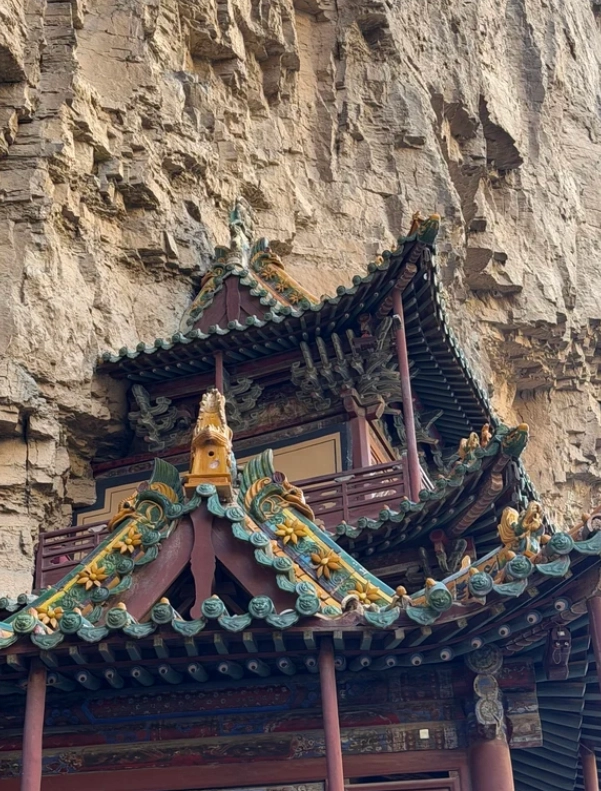
Why You Need a Real Map (and Not Just a Screenshot)
I always tell my clients: the temple isn't huge physically, but the crowds make it feel like a maze. The main route goes up a narrow staircase carved into the rock, then you cross a series of wooden balconies suspended by ancient beams. Without knowing the flow, you'll end up stuck behind a group taking selfies for ages.
Plus, there are two entrances — east and west. Most tourists pour in from the east gate because the parking lot drops them there. But the west gate is quieter and gives you a shorter walk to the temple itself. I've had days where I walked straight in from the west while the east line snaked back 50 meters.
Location & Getting There
The temple clings to a cliff in Hunyuan County, about 80 kilometers south of Datong city. You cannot just take a public bus that drops you at the door — the last 3 km is a winding mountain road with no sidewalk.
| From | Distance | Best Transport | Time | Tips |
|---|---|---|---|---|
| Datong city center | 80 km | Taxi / Didi / Private car | 1.5–2 h | Fix the price beforehand if taxi — around ¥200–250. Didi app works but English support is patchy. |
| Datong Railway Station | 85 km | Taxi (haggle) or bus #1 to Hunyuan then local minibus | 2.5–3 h | Bus #1 leaves every 30 min from Datong East. Get off at Hunyuan Bus Station, then take a minibus to the temple (¥10). |
| Hunyuan county town | 6 km | Taxi (¥15–20) or walk? No, too far | 10 min by car | Shared minibuses run from the town's main square when full. |
Pro tip: If you drive yourself, the last 500 meters before the east gate parking lot get jammed on weekends. I ask my clients to get dropped off at the west gate instead — just tell the driver "xī mén" (west gate). The road is a bit rougher, but you skip the lottery.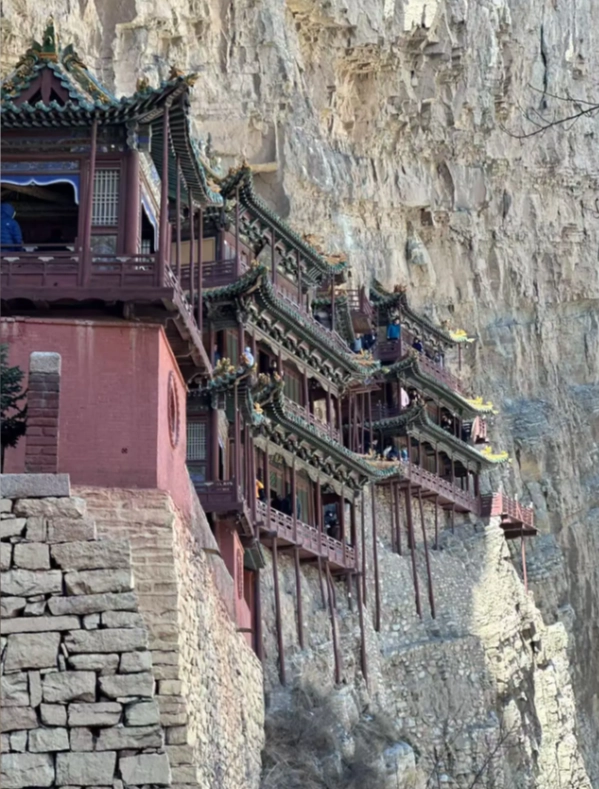
Ticket Prices & Booking (The Part That Frustrates Everyone)
Here's the part that makes me sigh every time. You cannot just rock up, hand over cash, and walk in. The temple requires a timed-entry reservation bought online. Yes, even for foreigners. And that online system is a WeChat mini-program — entirely in Chinese, no English switch.
| Category | Price (CNY) | Notes |
|---|---|---|
| Adult (full price) | ¥115 | Includes entrance to the temple and the surrounding scenic area. |
| Child (height 1.2–1.5m) | ¥58 | Bring passport for age verification; kids under 1.2m free. |
| Senior (65+) | Free | Must show passport; only Chinese seniors get free? Actually foreign seniors also free, I've confirmed. |
| Student (full-time) | ¥58 | International student ID works if it's ISIC. Bring your card. |
How to book without crying: I tell my clients to ask their hotel receptionist in Datong to help buy the tickets via the official WeChat mini-program (search "Hengshan Tourism"). Or, use a third-party site like Trip.com (English) — they add a small fee (¥10–15) but save you the language headache. Do this at least 2 days in advance, especially for weekends and Chinese holidays.
Payment warning: WeChat Pay and Alipay only. Cash is not accepted at the ticket window. International credit cards? Forget it. I always carry a spare Chinese friend's phone for payment — or you can ask your guide to pay and you reimburse with cash later.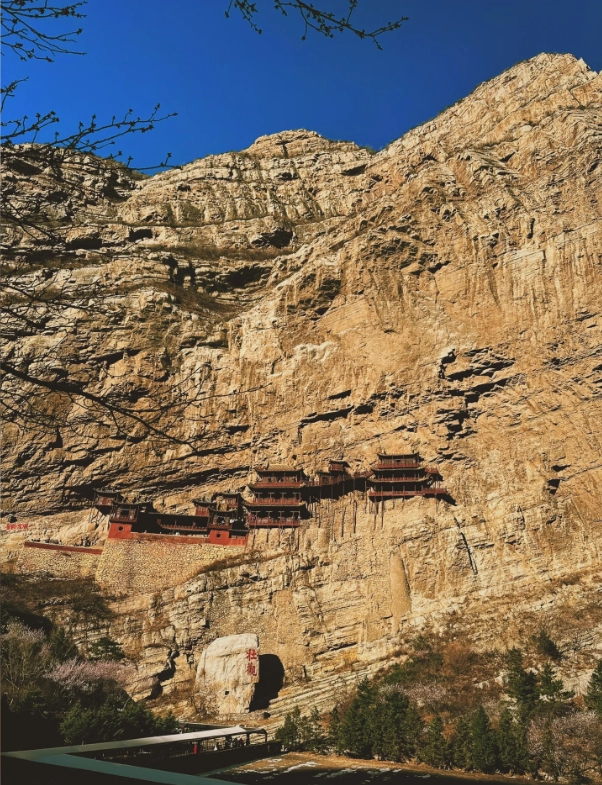
Best Time to Visit (When It's Not a Suffering Game)
Everyone says "visit early morning to beat the crowds." But let me be specific: between 7:30 and 8:30 AM is the sweet spot. The temple opens at 8:00 usually, but the gates open earlier for the scenic area. I aim to arrive at 7:45, be through the west gate by 8:00, and I'm already on the balcony before the first tour bus unloads at 9:00.
Afternoon? Avoid like a hangover. The sun blasts the cliff face from 1 PM to 3 PM, making photos overexposed, and the wooden walkways turn into a conga line of sweaty people. If you must go in the afternoon, target 4 PM onwards — the light softens, the tour groups disperse, and you get that golden glow hitting the temple pillars.
Season-wise, spring (April-May) and autumn (September-October) are perfect. Summer is hot and crowded, winter is freezing and some walkways may be closed due to ice — I had a group cancel in January because black ice made the stairs too dangerous.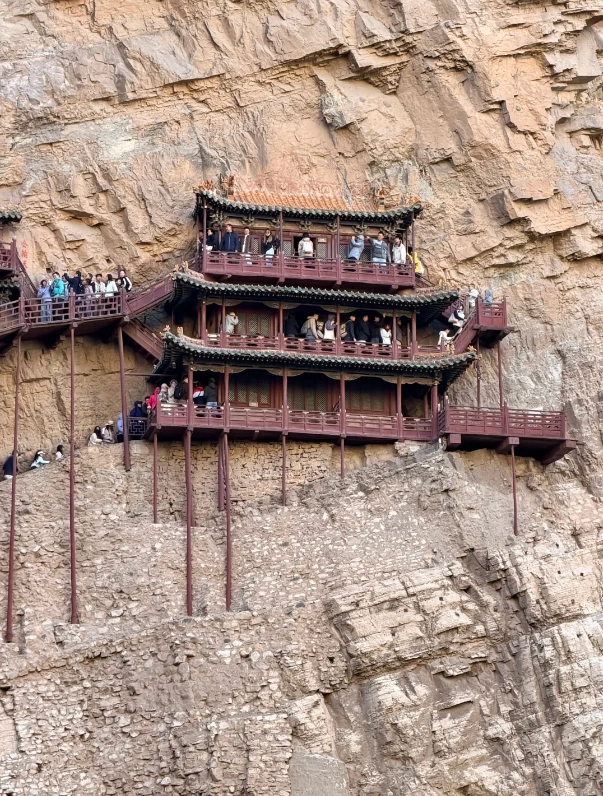
My Insider Route (No Crowds, Best Photos)
I've fine-tuned this after dozens of trips. Here's how I tackle it:
- Enter through West Gate. As I said, quieter. You walk past a small temple courtyard (not the main one) and directly approach the cliff from the side. The first view hits you suddenly — I love seeing my clients' jaws drop.
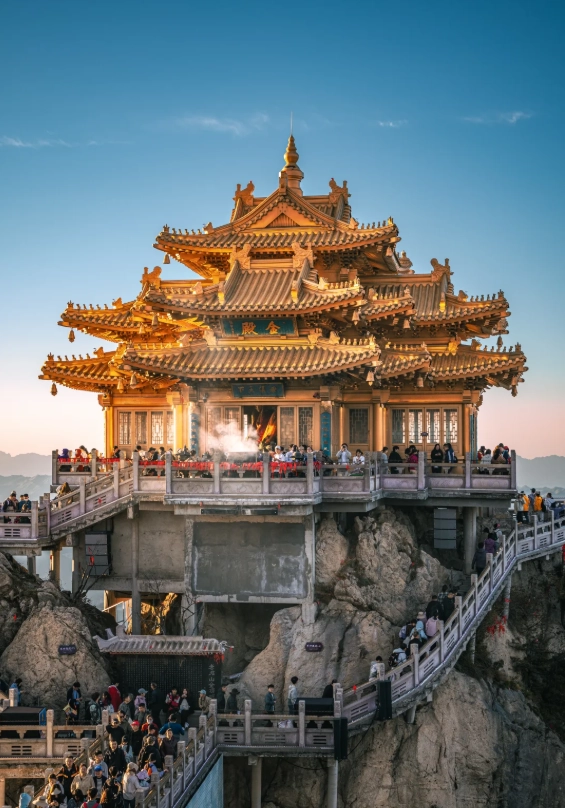
- Go straight to the highest balcony. Ignore the ground-level shrines for now. The staircase up is narrow (only one person wide), so you want to be among the first. That balcony on the topmost floor has the famous "temple hanging on a thread" angle.
- Photography spot: northwest corner of the middle balcony. Most people cram onto the central bridge. Instead, walk to the end where the balcony turns — you'll get a clear shot of the whole temple silhouette with no people in the frame. I usually tell my group: "Slide against the wall, back to the rock, and shoot towards the sun."
- Descend and explore the lower halls. They house a mix of Buddhist, Confucian, and Taoist statues — unique because the temple is a rare triple-religion site. But honestly, the statues aren't the star; the engineering is. Those ancient wooden beams stuck into the cliff? Some are over 1,500 years old.
- Exit via East Gate for a different view. The path down from the east side gives you a full-angled panorama. Plus, there's a small souvenir stall that sells actual printed maps (Chinese only) for ¥5 — I buy one every time as a keepsake.
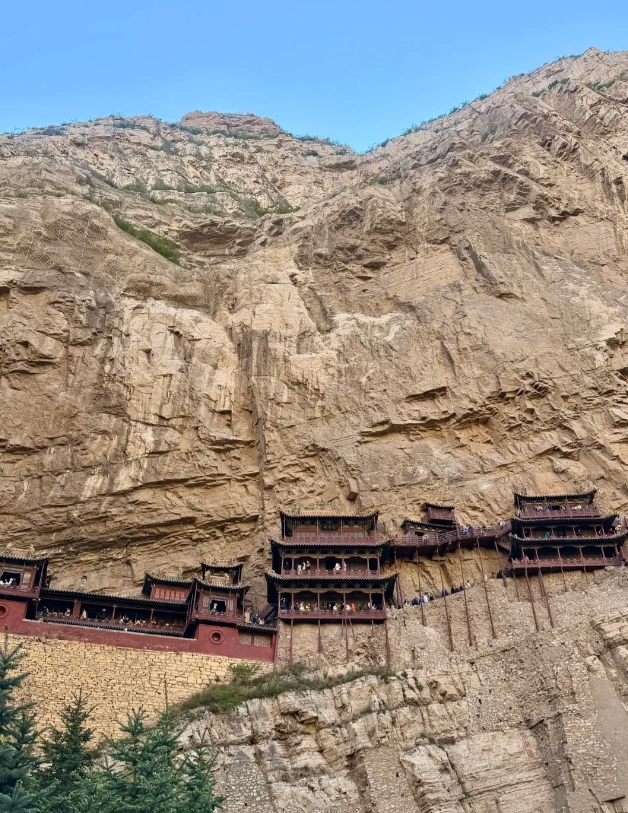
I once had a couple who wanted to linger at the top balcony for sunset. Security started shooing people out at 5:30 PM (closing time varies by season). The guard was nice enough to let them stay 10 extra minutes — just be polite and ask.
What to Watch Out For (My Pet Peeves)
- The toilet situation. The only public toilets are near the east gate ticket office. They are squat-style and often run out of paper. I always bring my own tissue and hand sanitizer. And the queue? During peak hours, it can be 15 minutes. Pee before you arrive.
- No lockers. If you carry a backpack, it gets in the way on narrow staircases. I recommend a small cross-body bag with just essentials: phone, water, snacks, cash. Leave the rest in the car or hotel.
- The staircase is not for the faint-hearted. It's steep, uneven, and has no handrail on some sections. I've seen people panic halfway and freeze. If you're afraid of heights, consider visiting just the scenic area below — you can still see the temple from a distance without climbing.
- Mosquitoes in summer. The shaded cliff sides are prime mosquito territory. I got eaten alive my first summer. Pack insect repellent.
- No food stalls inside. The only decent meal options are outside the east gate — a row of small restaurants serving noodles and Hunyuan's famous stewed tofu. I always grab a bowl after visiting; it's cheap (¥15–20) and authentic.
Digital nightmare: Even I, a local guide, once had my Alipay crash at the ticket booth because I forgot to update the app. The staff couldn't help. Always have two payment methods ready — or a Chinese friend to wire money.
FAQ (What I Get Asked the Most)
That's my Hanging Temple map — not the paper one, but the one that gets you through without a headache. I've walked these planks more times than I count, and every single time I'm still amazed that a wooden temple from the 6th century holds up against gravity. Just don't blindly trust the map you pull from a blog written by someone who visited. Trust the guy who's been there fifty times.
Verified and fact-checked by the editorial team. This content has been fact-checked to ensure informational precision.





No comments yet.