 Lei Li
Let's be honest. You've seen the pictures of the Temple of Heaven's iconic blue-tiled Hall of Prayer for Good Harvests. You know it's a UNESCO site. But standing at the gate, map in hand, the place feels overwhelmingly vast. Which gate should you enter? How do you actually avoid the tour groups that seem to swallow every path? And what's the story behind those strange circular terraces?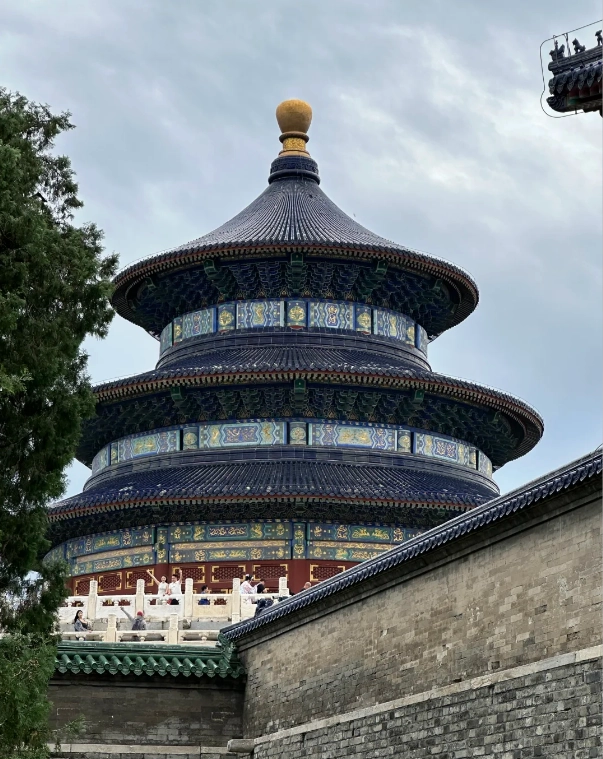
I've visited the Temple of Heaven more times than I can count, and I've learned a few things the hard way. This isn't just a list of facts. It's a guide built on missteps and discoveries, designed to help you experience the serenity and profound symbolism this place was meant for, not just shuffle through a crowd.
Your Quick Navigation Map
Temple of Heaven Basics: Tickets, Hours & Getting There
First, the practical stuff you need to plan your day. The Temple of Heaven Park is huge, about 2.7 square kilometers. There are multiple gates, but only certain tickets let you see the core historical buildings.
The most common mistake visitors make is buying the wrong ticket. You can buy a cheap ticket just for the park, but that won't get you inside the walled compound containing the Hall of Prayer for Good Harvests, the Imperial Vault of Heaven, and the Circular Mound Altar. You need the through ticket.
| Ticket Type | Price (Approx.) | What It Covers |
|---|---|---|
| Park Entry Only | CNY 15 | Access to the outer gardens and park areas only. Not recommended for first-time visitors. |
| Through Ticket | CNY 34 | This is the one you want. Includes park entry + access to the Hall of Prayer for Good Harvests, Imperial Vault of Heaven, Circular Mound Altar, and the Echo Wall. |
Opening Hours:
Park: 6:00 AM - 10:00 PM (Yes, it opens incredibly early).
Historical Monument Sites (where your through ticket applies): 8:00 AM - 6:00 PM (Apr-Oct), 8:00 AM - 5:30 PM (Nov-Mar). Last entry is usually one hour before closing.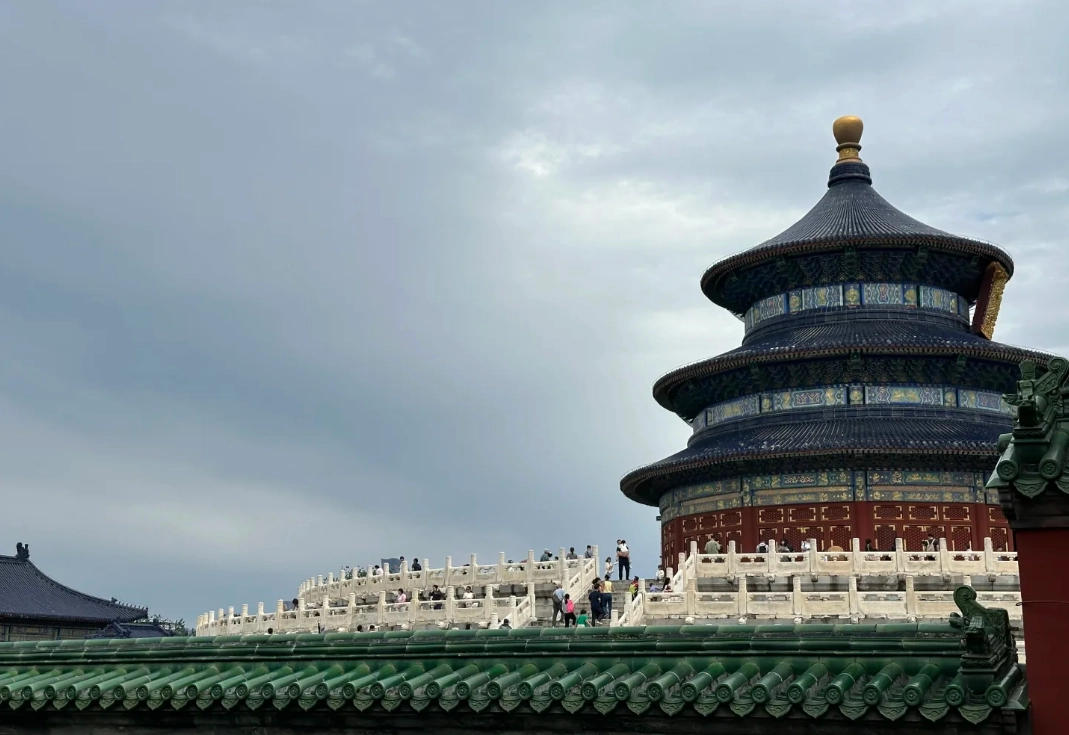
How to Get There:
By Subway: This is the easiest way. Take Line 5 to Tiantan Dongmen Station (Exit A). You'll walk right out to the East Gate. It's seamless.
By Bus: Many buses stop near various gates. For the South Gate, bus 36, 53, 120, or 122 to "Tiantan Nanmen."
I always recommend the subway. Beijing traffic is unpredictable, and the subway drops you exactly where you need to be.
How to Avoid the Crowds at the Temple of Heaven
Here’s the insider tip most blogs don't emphasize enough: direction matters more than time. Most tour groups enter from the South Gate and move north. Independent travelers often follow guidebook advice and enter from the North Gate. This creates two major traffic flows that collide in the middle.
My strategy? Enter from the East Gate or West Gate. The crowds are noticeably thinner. Start your visit at the Hall of Prayer for Good Harvests, then walk south along the central axis. You'll often be moving against the grain of the big groups, which means clearer paths and better photo opportunities.
As for time, the early bird rule applies, but with a twist. The park opens at 6 AM for locals to do tai chi, dance, and play cards. It's a magical scene and completely free if you just want to experience the park atmosphere. However, the historical monuments don't open until 8 AM. If your goal is to photograph the main hall with minimal people, be at the gate to the Hall of Prayer compound at 7:55 AM. The first 30 minutes after opening are golden.
The other sweet spot is late afternoon, after 4 PM. The big tour groups are heading out for dinner. The light is softer, warmer, and perfect for photography.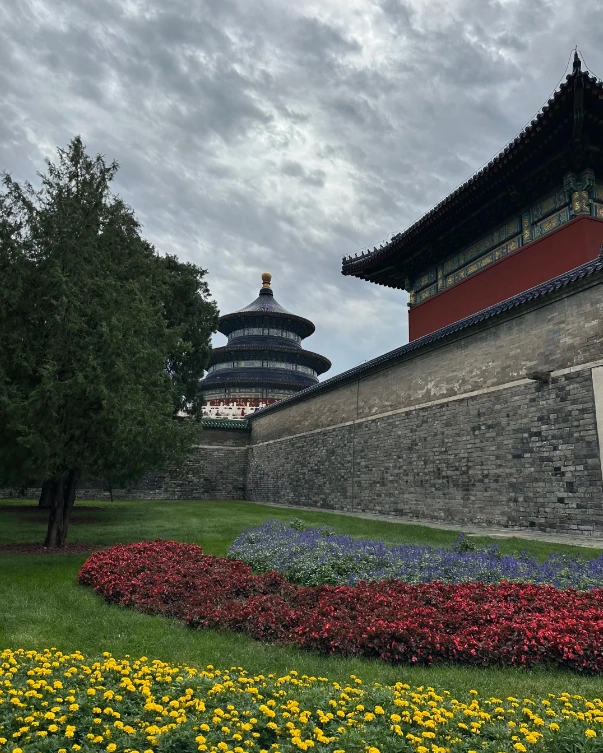
What to See: A Walk Through the Axis of Heaven
The Temple of Heaven isn't a temple for worshiping gods. It was where the Emperor, the Son of Heaven, performed solemn rites to pray for good harvests and divine favor. The entire complex is a cosmological diagram. The northern part is circular, representing Heaven; the southern part is square, representing Earth. Walking from north to south is a symbolic journey.
The Hall of Prayer for Good Harvests
This is the postcard view. The triple-gabled, circular hall with its brilliant blue tiles is stunning. But look closer. The structure is built without a single nail. The 28 pillars inside represent the 28 constellations, the four central pillars the seasons, and so on. It’s easy to just snap a picture and leave, but spend a moment walking a full circle around it. The perspective changes beautifully.
The Imperial Vault of Heaven and the Echo Wall
This smaller, single-gabled building houses the spirit tablets. It's surrounded by the famous Echo Wall. The theory is that you can whisper at one end and be heard at the other. In reality, with modern crowds and restoration work (the wall's surface isn't as perfectly smooth as it once was), the effect is often underwhelming. Don't get your hopes up for a profound acoustic experience. See it as a fascinating historical feature, not a guaranteed physics trick.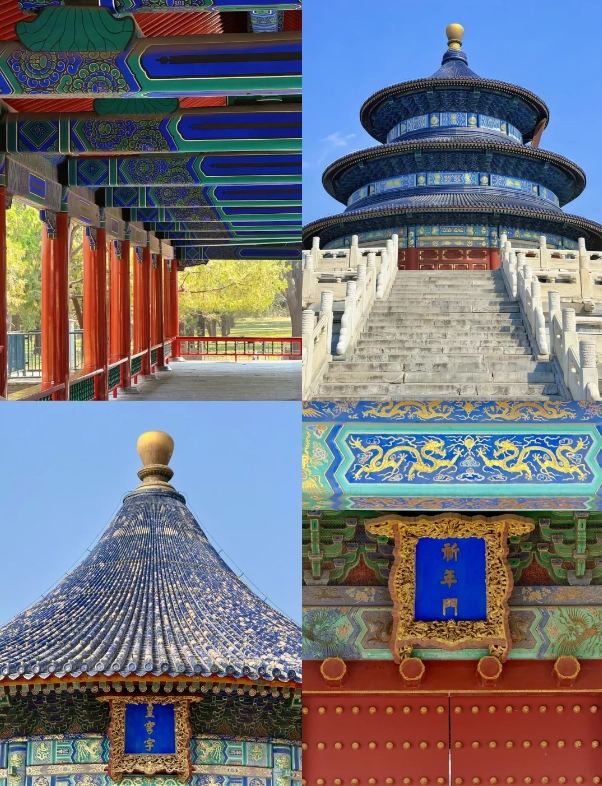
The Circular Mound Altar
This is my favorite spot. A three-tiered, white marble open-air altar. The number of stones in each tier is a multiple of nine, the sacred imperial number. Stand on the round "Heart of Heaven" stone in the very center. Your voice will resonate back to you, amplified. It’s a quiet, powerful moment if you can experience it without a dozen people trying the same thing. This is where the Emperor would communicate directly with Heaven.
A Suggested Route:
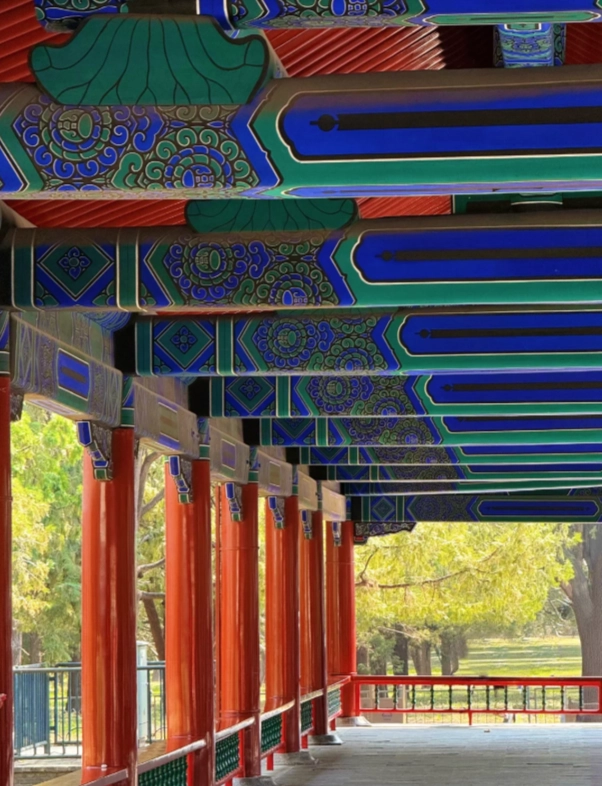
Half-Day Visit: East Gate → Hall of Prayer for Good Harvests → Danbi Bridge (the long walkway) → Imperial Vault & Echo Wall → Circular Mound Altar → Exit at South Gate.
Full-Day, Leisurely Visit: Follow the half-day route above. After exiting the South Gate, walk back into the general park area (your ticket is still valid). Explore the western side of the park. You'll find ancient cypress trees, some over 600 years old, and local life in full swing—people singing opera, dancing, playing chess. It's a cultural show in itself.
Temple of Heaven Photography Tips
Getting that clean shot requires patience and positioning. For the Hall of Prayer, the classic front-on shot is from the southern staircase. For a more unique angle, try shooting from the elevated walkways to the side. The lattice windows of the surrounding walls can also make for beautiful frames.
The Circular Mound Altar looks best when you can capture its geometric perfection from above. Climb to the top tier and photograph looking down.
Most importantly, look for the human element. The contrast between the ancient architecture and the vibrant, modern life of Beijingers enjoying the park tells the real story of the Temple of Heaven today.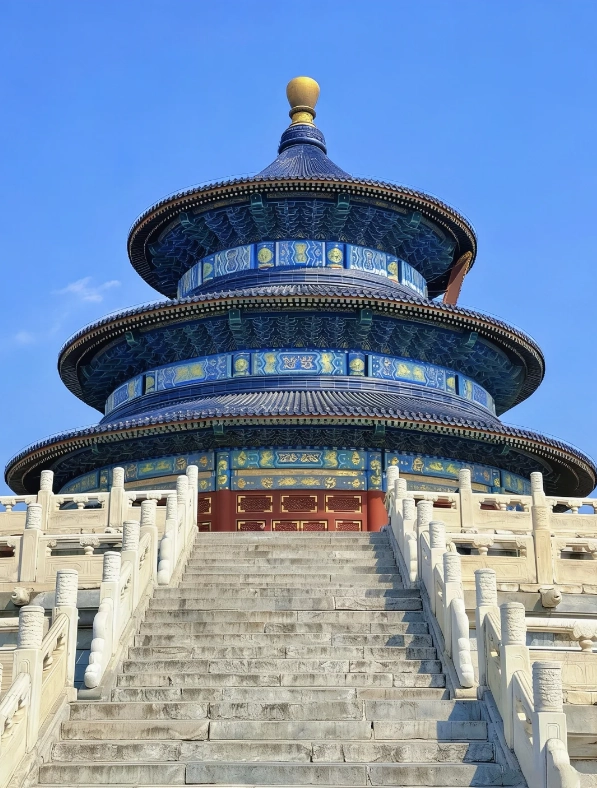
Where to Eat Near the Temple of Heaven
You'll work up an appetite. The park itself has small snack kiosks (think instant noodles, ice cream), but for a proper meal, head just outside the gates.
Near the East Gate: The area around Tiantan Dongmen subway has several local Beijing-style restaurants. Look for places serving zhajiangmian (noodles with fried bean sauce) or jiaozi (dumplings). They're affordable, fast, and authentic.
Near the West Gate: For a more upscale option, consider Liqun Roast Duck Restaurant. It's in a nearby hutong (alleyway), not a fancy hotel. The duck is excellent, the setting is traditional, and it feels like a discovery. Expect to spend around CNY 150-200 per person. Address: 11 Beixiangfeng, Zhengyi Lu (north of the West Gate, a 10-15 minute walk).
Your Temple of Heaven Questions Answered
 How much walking is involved at the Temple of Heaven?
The Temple of Heaven is more than a checklist item. It's a place where imperial ambition meets celestial geometry, and where that history now shares space with the daily rhythm of Beijing life. Go with comfortable shoes, the right ticket, and a plan to enter from the side gates. You'll find the space, the quiet, and the awe that has drawn people here for centuries.
This guide is based on personal, repeated visits and observations. Details like ticket prices and subway access are regularly verified for accuracy.





I had high hopes based on all the glowing reviews, but honestly I felt a bit let down. The main buildings are beautiful from a distance, but up close they look weathered and the paint is chipping in places. The park is nice but nothing special compared to other Beijing parks. Too many souvenir stalls and crowds made it feel overly commercial. Maybe a cloudy day ruined the vibe, but I'd skip it if you're short on time.
Great historical site with impressive architecture. The park itself is lovely for a morning stroll and you can see locals doing all sorts of activities. However, it was extremely crowded even on a weekday, and the ticket price feels a bit steep for the actual indoor areas – they're quite small. Some parts were under renovation too, which was a letdown. Still worth visiting, but manage expectations.
One of the highlights of my Beijing trip. The scale and precision of the temple complex are mind-blowing – every detail has symbolic meaning, from the number of pillars to the colors. Standing on the center stone of the Circular Mound and speaking into the air, hearing your own voice echo back, gave me chills. A must-see for anyone interested in Chinese culture and history.
As a photographer, this place is a dream. The symmetry of the main hall is incredible from a low angle, and the Circular Mound Altar offers perfect geometric patterns for wide shots. I came right at opening time and had the place almost to myself for the first 30 minutes. Don't forget to test the echo at the Imperial Vault – it really works! 5 stars without hesitation.
Absolutely stunning! I arrived just before sunset and the golden light hitting the blue glazed tiles was magical. The park was full of locals practicing tai chi and playing traditional instruments – it felt like stepping into another world. The Hall of Prayer for Good Harvests is even more impressive in person. Highly recommend spending at least 3 hours here to soak it all in.
Underwhelming given the hype. The buildings are beautiful from a distance, but up close you can see a lot of peeling paint and faded details – it's clearly in need of restoration. Also, there weren't enough benches to sit and rest, and the food inside is overpriced instant noodles. If you're short on time, skip it and go to the Summer Palace instead.
Came here on a whim during a layover and it turned out to be the highlight of my trip. I'm not usually a 'temple person', but walking the long corridor and watching the old men fly kites in the park completely changed my mood. The scale is humbling. Only downside: the signage could be better – I almost missed the Imperial Vault of Heaven.
I loved the park itself! The locals practicing tai chi and playing chess under the ancient cypress trees gave it such a lively, authentic vibe. The Echo Wall was fun to test out, though the acoustics weren't as impressive as I'd hoped. For the entrance fee (around 34 RMB in peak season), it's decent value – not the cheapest, but not a rip-off either.
Honestly, I was a bit let down. The architecture is impressive, but the whole place felt overly commercialized – vendors everywhere selling cheap souvenirs and hawking photo ops. Plus, the queue for the main hall was ridiculous even on a weekday. I'd say it's worth a quick look but don't expect a quiet, reflective experience like I'd read about.
Visited early in the morning and it was absolutely magical – the mist was still rising over the Hall of Prayer for Good Harvests. The park felt so serene before the crowds hit. Definitely one of the most peaceful spots in Beijing. If you're coming for photos, aim for golden hour around 4pm too. 10/10 would recommend!
Nice historical site overall. The subway stop is very convenient—right at the gate—so getting there is easy. The park itself is huge and well-maintained, with plenty of shaded walking paths. That said, the signage inside the main temple area is pretty confusing. I ended up walking in circles trying to find the exit. Also, the souvenir shops near the North Gate are overpriced compared to the ones outside. I'd recommend bringing your own water because the on-site drinks are expensive. Solid 4 stars for the history and architecture, but a few logistical hiccups knocked it down a notch.
This place stole my heart. I arrived at 6:30 AM right when the gates opened, and the entire complex was practically empty except for a few locals exercising. The sunrise light hitting the blue-glazed tiles of the Hall of Prayer was absolutely gorgeous. I sat on a stone bench near the Imperial Vault of Heaven for 20 minutes just listening to the birds and the distant sound of someone playing a bamboo flute. It felt like stepping back in time. If you're a morning person, this is the best way to experience the Temple of Heaven. A perfect 5 out of 5 for the peaceful vibe alone.
Honestly, I was a bit underwhelmed. Maybe I hyped it up too much from the photos online, but the temple itself is basically just one big hall with a lot of scaffolding when I visited (they were doing restoration). The park is nice, but it's more like a public park than a grand imperial site. The entrance fee felt a bit steep for what you actually see inside the main compound. I'd give it a 3—it's okay for a short visit if you're already in the area, but I wouldn't make a special trip.
Really enjoyed my visit here! The historical significance is undeniable, and the architecture is truly impressive. The Echo Wall and the Circular Mound Altar are fascinating. However, I went on a Saturday afternoon and it was insanely crowded—hard to get good photos without people in the frame. Also, some of the explanatory signs could be clearer; I ended up relying on an audio guide which helped. Still a solid 4-star experience, just plan your timing better than I did.
Absolutely stunning! The Temple of Heaven exceeded every expectation I had. Walking through the massive park early in the morning, watching locals practice tai chi and play traditional instruments, was magical. The Hall of Prayer for Good Harvests is breathtaking up close—the intricate wooden architecture and vibrant colors are even more impressive in person. I spent nearly four hours just wandering the grounds and soaking in the peaceful atmosphere. If you're visiting Beijing, this is an absolute must-see. Pro tip: go at sunrise to avoid crowds and experience the park at its most serene.