 Lei Li
Standing on the worn, uneven slabs of the Lugouqiao Ancient Stone Bridge, you feel the weight of time under your feet. Most visitors come knowing one thing—the Marco Polo Bridge Incident of 1937. I did too. But after spending a full afternoon here, walking its length multiple times, I realized that focusing solely on that 20th-century event does a massive disservice to this 800-year-old marvel of engineering and art. The real story is in the stone: the arches that have defied the Yongding River for centuries, and the legion of lions, each with a personality frozen in granite. This guide is for anyone who wants to see beyond the textbook entry and experience the bridge as a living monument.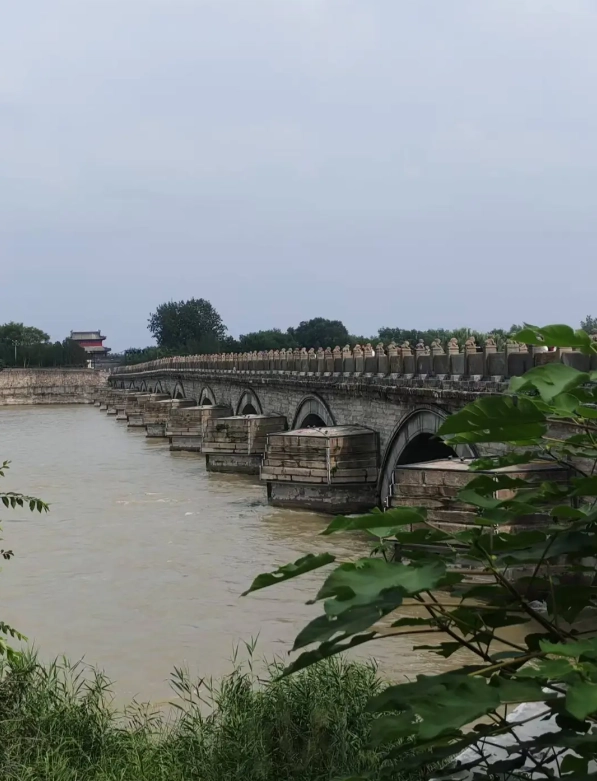
What You'll Find in This Guide
Beyond Marco Polo: Understanding Lugouqiao's Layers
Let's clear this up first. Yes, the bridge is internationally known as the Marco Polo Bridge because the Venetian explorer described it in his travels. And yes, the 1937 incident here was a pivotal moment. But if that's all you look for, you'll miss the point. The bridge was already over 700 years old when that happened. Its significance is cumulative.
When I visited, I saw three distinct groups of visitors: history students solemnly reflecting, domestic tourists laughing while trying to count lions, and local elders using the bridge as a pleasant park for their morning walk. That's Lugouqiao today—a national memorial, a feat of ancient architecture, and a community space all at once. The key is to engage with all these layers. Start at the east end, near the stele pavilions, to absorb the formal history. Then walk slowly across, touching the lions (everyone does it), and finally, just stand in the middle. Look at the river, the arches, the traffic on the modern bridge nearby. The contrast tells its own story.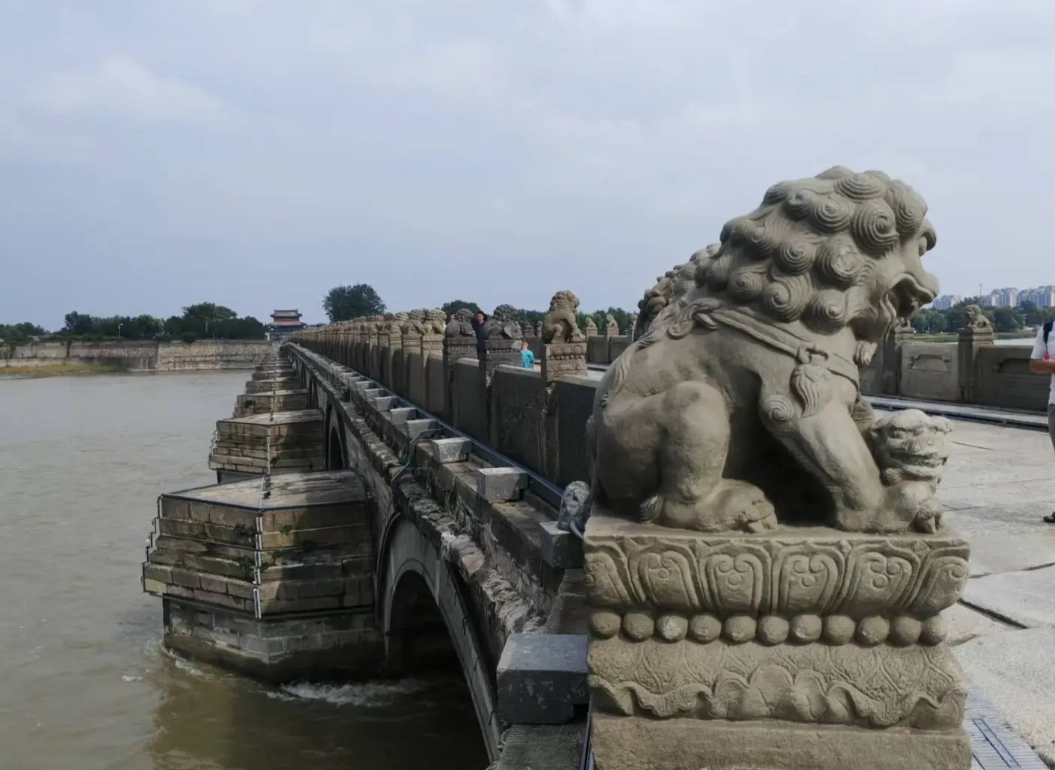
The Bridge's Engineering and Long History
Construction began in 1189 and finished in 1192, during the Jin Dynasty. That's not just a date; it means this structure predates the Renaissance in Europe. It's a solid granite bridge, 266.5 meters long and 9.3 meters wide, supported by 11 arches. The genius is in its durability. The piers are protected by triangular iron spits called jianjian (literally "sword swords") to break up ice and flood debris—a feature I had to get down near the riverbank to appreciate properly.
The most striking visual elements are the white marble balusters and the hundreds of stone lions. But don't ignore the surface. The central stone slab pathway is noticeably smoother and more worn than the sides, a literal groove carved by eight centuries of footsteps, cart wheels, and time. According to records from the Beijing Municipal Administration of Cultural Heritage, the bridge has undergone necessary repairs but retains its original structure and character, a testament to its initial build quality.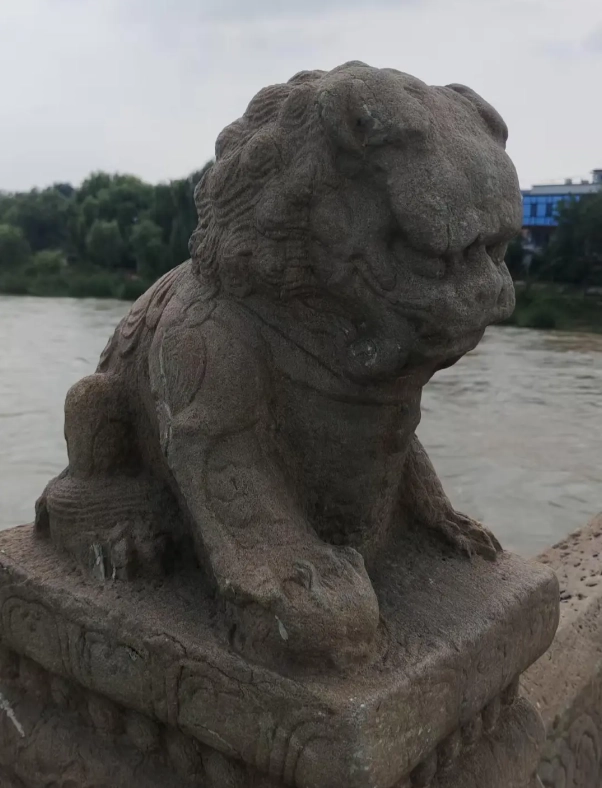
A Quick Timeline at a Glance
1189-1192: Bridge constructed under the Jin Dynasty.
13th Century: Described by Marco Polo, who called it the finest in the world.
1698, 1730s, 1890s: Major repairs recorded during the Qing Dynasty.
July 7, 1937: The Marco Polo Bridge Incident, marking the start of full-scale war.
1961: Listed among the first group of Major Historical and Cultural Sites Protected at the National Level in China.
Today: Functions as a museum site and public park.
The Real Challenge: Counting the Stone Lions
This is the bridge's famous puzzle. The saying goes, "The lions on Lugouqiao are uncountable." Officially, there are 501. I decided to test this. The challenge isn't the number—it's the artistry. The lions aren't uniform Imperial guards; they're a chaotic, delightful menagerie. Large lions have smaller lions climbing, playing, or peeking from behind them. Some are playful, some serene, many are worn smooth by centuries of touch.
My advice? Don't stress about the final count. Instead, look for the details. On the north side, about a third of the way from the east end, I found a lion playfully biting the robe of a cub. On the south side, several lions have lost their detailed features to erosion, creating ghostly, abstract shapes. The lions on the newer, Qing-era balusters (you can tell by the slightly different stone style) are often more dynamically posed. The joy is in the discovery, not the tally.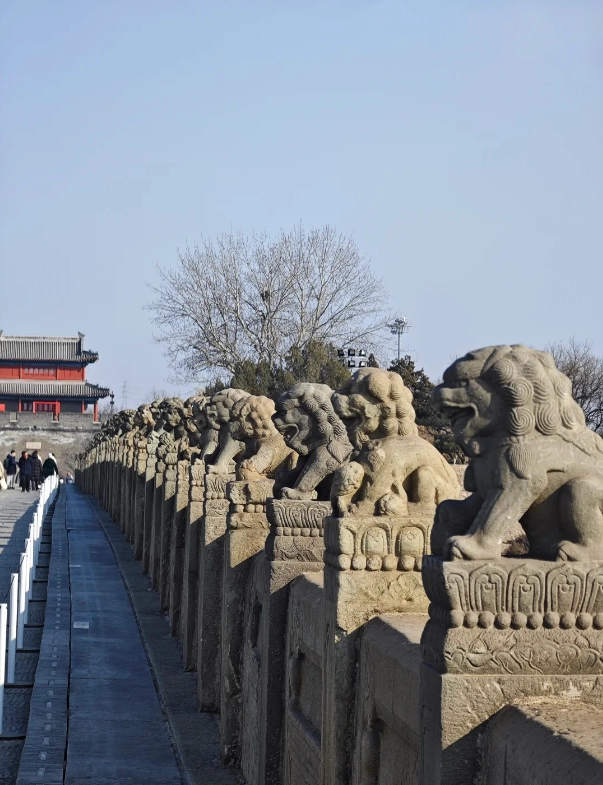
How to Approach Your "Lion Hunt"
Start from one end and move systematically. I found it easier from the west end, moving east. Use your camera to zoom in on the intricate groups. The most complex clusters are often on the ends of the balusters. And yes, touching them is a tradition believed to bring good luck—notice how the heads and backs of the most popular ones are polished to a shine.
Practical Information for Your Visit
Here’s everything you need to plan your trip, based on my visit. The site is more than just the bridge; it includes a small museum, park areas, and commemorative sculptures.
| Item | Details |
|---|---|
| Ticket Price | 20 RMB for adults. The ticket covers entry to the bridge and the nearby Lugouqiao (Marco Polo Bridge) Historical Museum. No separate bridge fee. |
| Opening Hours | 7:00 AM to 8:00 PM (April to October), 7:00 AM to 6:00 PM (November to March). The museum hours are usually 9:00 AM to 4:30 PM, closed on Mondays. |
| Address | Lugouqiao Chengguan Nei, Fengtai District, Beijing, China. 北京市丰台区卢沟桥城内街 |
| Best Time to Visit | Weekday mornings. Weekends get crowded with families. Late afternoon light is beautiful for photography. Avoid major Chinese public holidays. |
| Time Needed | Plan for 1.5 to 2.5 hours. This gives you time to walk the bridge slowly, visit the informative (though small) museum, and explore the surrounding Wanping Fortress area. |
| On-site Facilities | Public toilets are available near the entrance and museum. Small stalls sell water and snacks. Limited seating along the park paths. |
A note on the museum: it's modest but worthwhile. Its exhibits on the 1937 incident are sobering, but I found the models showing the bridge's construction techniques and the historical maps more uniquely valuable. It provides context you won't get just from staring at the stones.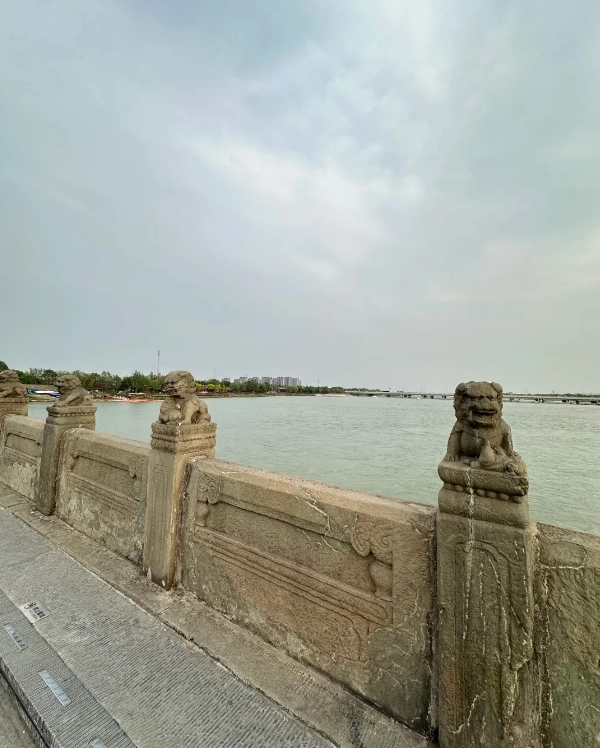
How to Get to Lugouqiao Bridge
Located in southwest Beijing's Fengtai District, it's not right by a subway station, but it's very manageable. Here are your options, tested and ranked.
By Subway & Bus (Recommended for most visitors): Take Beijing Subway Line 14 to Dawayao Station. From Exit D, walk about 150 meters to the "Dawayao" bus stop. Catch bus 339 or 458. The ride takes about 15-20 minutes. Get off at the "Lugou Xinqiao" stop. From there, it's a 5-minute signed walk to the ticket office. This combo is cost-effective and drops you close.
By Taxi or Ride-Hailing (Didi): The most direct door-to-door option. From central locations like Tiananmen Square or Wangfujing, expect a 45-60 minute ride depending on traffic, costing roughly 80-120 RMB. Tell the driver "Lugouqiao". This is the best choice if you're short on time or in a group.
By Tour Bus: Some Beijing sightseeing bus lines include Lugouqiao on itineraries covering the southwest, often combined with the Ming City Wall Relics Park. Check with tour operators like Beijing Tourism Group for current schedules. This offers convenience but less flexibility.
Driving Yourself: There is a parking lot near the entrance, but it fills up quickly on weekends. Navigating Beijing traffic can be stressful for visitors. I'd only recommend this if you are very comfortable driving in China and plan a very early arrival.
Your Lugouqiao Questions Answered
 How does visiting Lugouqiao compare to seeing the more famous bridges in Beijing, like the 17-Arch Bridge in the Summer Palace?
Standing on Lugouqiao at dusk, watching the shadows lengthen across the lions, I felt its layers most acutely. It's not a single-note monument. It's a lesson in stone, resilience, and how history accumulates in a place. Go with curiosity, look closely, and let the bridge tell you its many stories.
This article is based on personal, on-site visits and cross-referenced with official information from the Beijing Municipal Administration of Cultural Heritage.





Honestly, I was a bit underwhelmed. The bridge is only about 260 meters long, so you can walk across it in 5 minutes. The entrance fee of 20 yuan is okay, but I expected more for the hype. Most of the lions look worn down and some are even missing parts. The surrounding area is very touristy with loud souvenir vendors. If you're short on time, I'd skip it and visit the Summer Palace instead. Meh experience overall.
A very interesting site with a rich story behind it. The bridge itself is well-preserved and the lion sculptures are charming. I appreciated the detailed signage about the 1937 incident. That said, it was quite crowded when I visited (a Saturday morning), and some of the lions show significant weathering – I understand it's natural, but better conservation notices would help. Still, a solid 4-star experience for a history lover.
Took our two kids (ages 7 and 9) here and they had a blast trying to count all the stone lions – we lost track at around 270! The bridge is wide and safe for little ones to walk on. There are information boards that explain the history in simple terms, which kept them engaged. The entrance fee is reasonable, and we spent about 1.5 hours. Only minus: not many food options nearby, so pack snacks.
Came here just before sunset and it was magical. The golden light on the ancient bridge and the calm Yongding River created such a peaceful scene. There were hardly any crowds at that hour, so I could soak in the atmosphere. The stone lions look majestic against the twilight sky. If you want a quiet, reflective experience, go late afternoon. Definitely one of the best historical sites I've seen in China.
Absolutely loved this place! The stone lions are incredibly detailed – each one has a different expression and pose. I spent almost an hour just walking along the bridge and photographing them. The historical plaques in English and Chinese really helped me understand the significance of the Marco Polo Bridge Incident. The surrounding park is well-maintained too. A must-visit in Beijing if you're into history and photography!
I went expecting a well-preserved relic but was disappointed by the heavy restoration. The original stone has been patched up so much that it barely feels authentic. The museum on site is small and poorly lit, with captions only in Chinese. I know history buffs will appreciate the significance of the Marco Polo Bridge Incident, but the actual experience doesn't match the importance. For 20 yuan it's okay, but I'd suggest reading up on the history beforehand to fill in the gaps. 3 stars—just average.
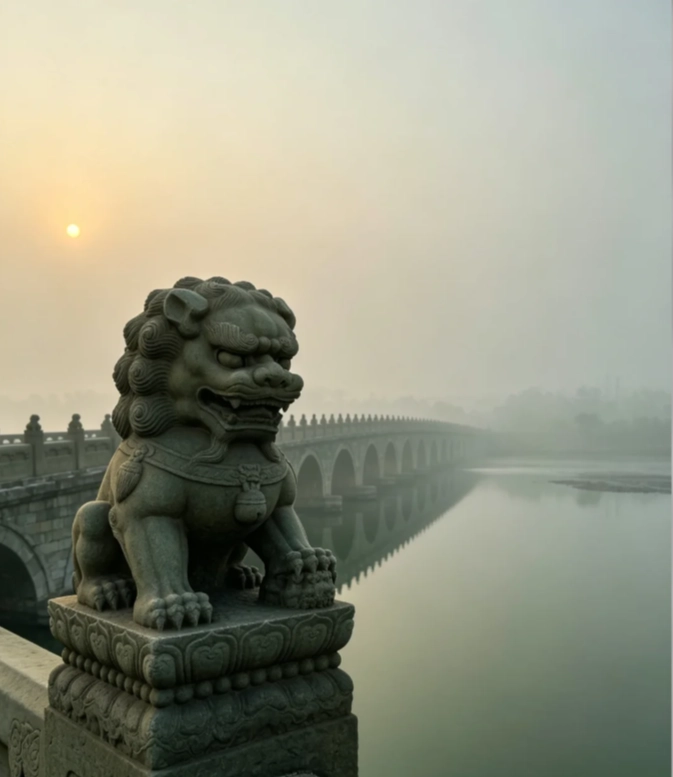
What a hidden gem! I visited on a misty autumn morning and the whole scene felt like a traditional Chinese painting. The bridge's stonework is stunning, and the riverbank is lined with willow trees. I spent a quiet hour just walking across and back, imagining the caravans that crossed here centuries ago. The local vendors selling snacks near the entrance are friendly, and the entrance fee is cheap. Definitely one of the most atmospheric spots in Beijing. 5 stars without hesitation.
We took our two boys here on a sunny Saturday and they loved counting the lions! The bridge is full of character and the kids enjoyed spotting the little lion cubs hiding under the bigger ones. The site is stroller-friendly, which was a relief. Only downside: very few shaded spots and the nearest restroom was quite far. We brought water and snacks, and spent about an hour exploring. A great educational stop if you're interested in Chinese history and architecture. Would come again!
Pretty cool historical site, but I was a bit underwhelmed given the hype. The bridge is smaller than I expected, and many of the stone lions are eroded or replaced with modern replicas. The surrounding park is nice for a walk, but there's not much information in English about the bridge's history. It cost 20 yuan to enter, which is fair, but I think it's more of a quick photo stop than a half-day outing. If you're in the area, sure, check it out—but don't go out of your way.
I finally made it to Lugouqiao after seeing so many photos online. The stone lions are honestly incredible—each one has a different expression, and you could spend hours just counting them and spotting the details. The bridge itself feels so ancient and peaceful, especially in the early morning when there aren't many tourists. I brought my sketchbook and sat by the river for a while. Absolutely worth the trip from Beijing city center. Highly recommend for history lovers and photography fans!
Honestly a bit underwhelming. Maybe my expectations were too high after reading about the 'Lions of Lugouqiao'. Many of the stone lions are heavily eroded or have modern replacement parts that look out of place. The restoration work seems half-finished. Also, there's almost no shade – in summer you'll roast. If you're not a hardcore history fan, you might be bored after 20 minutes.
Good value for the entry fee (20 RMB). The bridge itself is beautiful and well-preserved, but I expected a bit more 'ancient' atmosphere – there's a busy road right next to it with honking traffic. The little museum nearby was informative but poorly lit. Nice spot for a quick historical stop, especially if you pair it with a walk along the riverbank.
Decent historical site but a bit crowded on weekends. The carvings on the pillars are really impressive – each lion is completely different. However, the visitor center was closed when I went, and there weren't enough maps or audio guides available in English. Would suggest going on a weekday and doing some research beforehand. Still worth the trip from central Beijing.
Stunning photography spot! The grey stone arches reflected in the calm Yongding River create perfect symmetry. Arrived early at 7am – had the whole bridge to myself. The morning mist made the lion statues look even more mysterious. Only wish there were more benches to sit and sketch, but that's a tiny nitpick. Highly recommend for shutterbugs.
Absolutely loved wandering across this ancient bridge! The stone lions are each carved with unique expressions – I must have counted over 300 of them. Standing there at sunset, knowing this was the site of the Marco Polo Bridge Incident, gave me chills. Well-maintained pathways and informative plaques in both Chinese and English. A must-visit for any history enthusiast!