 Peng Gao
You've got five days in Xi'an. That's the perfect amount of time. Not a rushed weekend, not a drawn-out week. Five days lets you dive deep into the Terracotta Army, wander the ancient walls, get lost in the food alleys, and still have time to discover a few secrets most tourists miss. I've been guiding families and solo travelers here for over a decade, and this is the exact plan I use for my private tours. Forget the generic lists. This is a step-by-step, hour-by-hour blueprint based on what actually works, factoring in jet lag, ticket chaos, and the need for a good nap.
Your 5-Day Xi'an Roadmap
Day 1: Arrival and First Impressions
Land, check in, and do not try to be a hero. The goal today is acclimatization, not conquest.
Afternoon (Post-Check-in): Head straight to the Bell Tower. You'll see it from everywhere, but go inside. The ticket (around 30 RMB) gets you access to both the Bell and Drum Towers. Climb up for a 360-degree view of the city's central axis. It's the best orientation you can get. Pro tip: The Drum Tower performance (short drum shows at set intervals) is more visually interesting than the Bell Tower's.
Evening: Walk into the Muslim Quarter for dinner. I'm going to be brutally honest: the main street, Beiyuanmen, is a circus. It's packed, loud, and some stalls are tourist traps. The real magic is in the spider-web of alleys branching off it. For your first night, find Lao Mi Jia Pao Mo on Xiyangshi. You'll have to tear the bread yourself—it's part of the experience. A bowl costs about 40-50 RMB. They only take cash. After eating, just wander. Smell the rose cakes, watch the pomegranate juice being pressed, but hold off on buying much tonight.
Day 2: The Terracotta Army and Ancient Walls
Today is the big one. Most tours get this wrong by going in the morning with every other bus.
Morning (Relaxed Start):
Sleep in a bit. Have a big breakfast. We're aiming to arrive at the Terracotta Army Museum around 1:00 PM. Why? The massive morning tour groups (both domestic and international) are usually heading out for lunch between 12 and 1. You'll hit a sweet spot of slightly thinner crowds.
How to Get to the Terracotta Army:
Option 1 (Recommended): Take Metro Line 9 to Huaqingchi Station (Exit C). Follow the signs to the official tourist bus (green bus, about 5 RMB). It takes you directly to the parking lot in 15 minutes.
Option 2: A taxi from the city center costs 150-200 RMB one-way and takes about 50 minutes.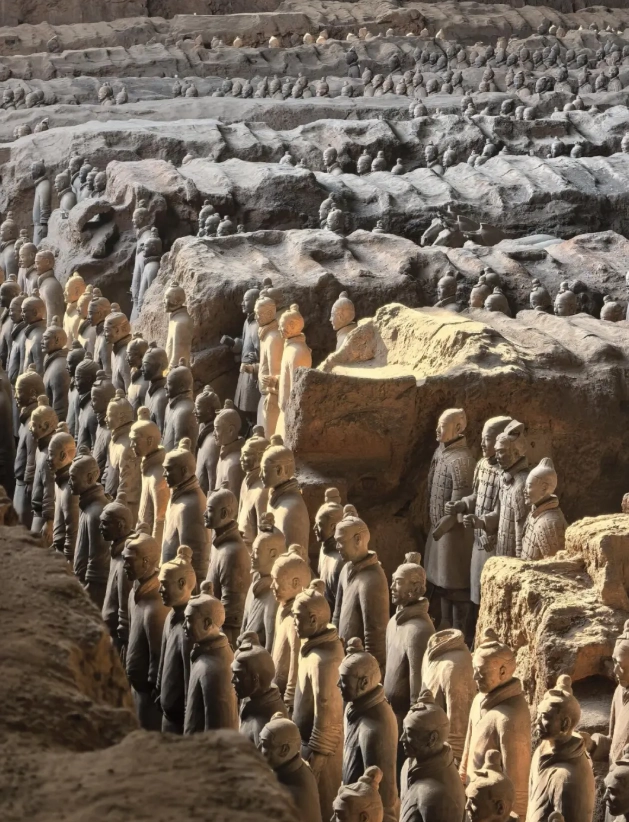
At the Site: Visit the pits in order: Pit 1 (the largest and most impressive), then Pit 3 (the command post), then Pit 2 (where you see figures up close in glass cases). Budget 2.5 to 3 hours total. Skip the souvenir shops near the exit—the official museum shop inside has better quality replicas.
Late Afternoon / Evening:
Head back to the city. You'll be tired. Grab a quick dinner near your hotel. Then, around 6:30 PM, go to the City Wall. Enter at the South Gate (Yongningmen). Rent a bike (45 RMB for 3 hours). Cycling the 14-kilometer perimeter as the sun sets and the city lights come on is an unforgettable experience. The stone path is bumpy in parts, but it's flat and manageable. Do half the circuit (from South to East Gate is lovely) and bike back, or complete the full loop if you're feeling energetic.
Day 3: Museums, Pagodas, and Tang Dynasty Dreams
A culture-heavy day with indoor options to give your feet a break.
Morning: The Shaanxi History Museum is world-class. It requires a free but mandatory online reservation (book 3-7 days in advance on their WeChat mini-program "陕历博票务系统"). The basic exhibition is free; the special Tang Dynasty mural hall (300 RMB) is pricey but stunning. Spend 2-3 hours here. The audio guide is decent, but the English signage is good enough.
Afternoon: Take a taxi (15 RMB) or bus to the Big Wild Goose Pagoda (Dayanta). Don't just look at it from the square. Go into the Daci'en Temple grounds (ticket 40 RMB). The atmosphere is peaceful. Climbing the pagoda costs extra (25 RMB) and the stairs are steep—the view is okay, but not essential.
Evening: This is my favorite local secret. Behind the Pagoda is the Tang Paradise (Datang Furongyuan) theme park. It's a modern recreation of a Tang garden, and yes, it's cheesy. But the nightly "Dream Back to the Tang Dynasty" water and light show at 8:30 PM is spectacular. Buy the evening entry ticket (after 5 PM, cheaper, around 120 RMB). Wander the lit-up gardens, then watch the show. It's a fantastic, if theatrical, end to a history day.
Day 4: Food, History, and Hidden Lanes
Today we go deeper into local life and lesser-known history.
Morning: Visit the Great Mosque of Xi'an in the heart of the Muslim Quarter. It's a serene, classical Chinese garden complex built as a mosque. An architectural marvel. Entry is 25 RMB. Go early (opens 8 AM) to enjoy it in quiet.
Then, for a real food adventure, ditch the main street. Let me give you a specific crawl in the surrounding hutongs:
- Start with breakfast dumplings (Jiaozi) at Ma Hong Xiao Chao Pao Mo (it's famous, just point at pictures).
- Walk down Dapiyuan alley for a Roujiamo (Chinese burger) from Wang Ji Xing. The line moves fast.
- Find Liu Biang Biang Noodles (the name is onomatopoeic for the sound of making the noodles). Thick, belt-wide noodles in a savory sauce. A huge bowl is 15 RMB.
This is eating like a local.
Afternoon: Choose one:
Option A (History): The Small Wild Goose Pagoda (Xiaoyanta) and the adjacent Xi'an Museum. Less crowded, beautiful park, and the museum focuses on the city itself. Free with ID.
Option B (Relaxation): The Forest of Steles Museum. It's for calligraphy lovers, but the courtyards are incredibly peaceful. A hidden oasis.
Day 5: Choose Your Own Adventure
Your final day. Tailor it.
| For History Buffs | For Food & Market Lovers | For a Day Trip |
|---|---|---|
| Han Yang Ling Mausoleum: The tomb of a Han emperor with smaller, but equally fascinating, terracotta figures. It's modern, underground, and often empty. Takes 2 hours, located north of the city (taxi needed). | Xi'an Banpo Museum: A Neolithic village site. Interesting, but out of the way. Afterwards, hit the Xingqing Palace Park to see locals dancing, singing, and practicing calligraphy with water on the pavement. | Huashan Mountain: The "plank walk" mountain. This is a full, strenuous day starting at 6 AM. Take the high-speed train (30 mins) to Huayin, then cable cars up. Only for the fit and fearless. Not a casual stroll. |
Last Evening: One final feast. Go to De Chang Gong on Fenxiang Street for their water-boiled fish (Shui Zhu Yu) or braised pork belly (Hong Shao Rou). It's a proper sit-down restaurant with an English menu. A satisfying, non-street food farewell meal. Expect to spend 80-100 RMB per person.
Where to Stay in Xi'an
Location is everything. Here’s the breakdown from a guide’s perspective:
Inside the City Wall (South Gate / Bell Tower Area): The most convenient. You can walk to multiple sites, and the metro is close. Perfect for first-timers. Atour Hotel (Xi'an Bell Tower) is a reliable, clean mid-range choice with good service. Expect 300-500 RMB/night.
Near the Big Wild Goose Pagoda: More modern, with great park views and easier access to that area's sights. Upscale hotels like the Sheraton are here. Better for families who want more space and quieter evenings.
Youth Hostels (Around the South Gate): Han Tang Inn or Xiangzimen Youth Hostel. Dorm beds from 60 RMB, private rooms around 200 RMB. Great for solo travelers to meet people, often with excellent travel desks that can help with ticket bookings. Wi-Fi is fine, but don't expect luxury.
Getting Around Xi'an
Metro: It's excellent, clean, and signs are in English. Covers most tourist areas. Buy single-ride tickets from machines or use Alipay/WeChat Pay to scan directly at the gate.
Taxi/Didi: Cheap and plentiful. Hail on the street or use the Didi app (China's Uber). Have your destination written in Chinese to show the driver. A cross-city ride rarely exceeds 40 RMB.
Walking: The core area inside the walls is very walkable. Just watch for electric scooters on the sidewalks—they're silent and deadly.
Your Xi'an Travel FAQs Answered
This article is based on my personal, on-the-ground experience guiding in Xi'an and has been fact-checked for current ticket prices and opening procedures as of my last visit.






I'm so glad I found this itinerary before my family trip! The insider advice saved us from the tourist-trap restaurants and overpriced souvenir shops around the fortress. My kids especially loved the evening bike ride on the City Wall—the guide's suggestion to rent bikes at the south gate was perfect. We tweaked a few timings, but overall it gave us a stress-free 5 days. Will definitely look for similar guides for other cities.
Decent guide, but a bit outdated on some restaurant prices and opening hours. I tried to visit a tea shop mentioned on Day 4, but it was permanently closed. Also, the map references could use more precise coordinates or QR codes. That said, the historical context added a nice layer to the sights, and the pacing worked well for me as a first-timer. Worth a read, but double-check everything before you go.
Honestly, this itinerary exceeded my expectations. I've used dozens of travel guides online, but this one felt personal—like a friend was showing me around. The author includes great little details, like which side of the wall to bike on for the best sunset photos. My favorite part was the hidden dumpling spot near the Bell Tower that I would've never found on my own. Highly recommend printing this out and bringing it along!
I really wanted to love this itinerary, but I found it a bit too packed for my pace. Some days felt like a marathon, especially Day 3 with the Great Mosque and the City Wall in the same afternoon. The suggestions are solid, but I wish there were more flexibility for downtime or alternative options for slow travelers. Still, it's a decent starting point if you're okay with a jam-packed schedule.
This guide was an absolute lifesaver for my solo trip to Xi'an! The day-by-day breakdown made planning effortless, and I loved the insider tips on avoiding the long queues at the Terracotta Warriors. The local food recommendations were spot-on—especially the street food alley near the Muslim Quarter. I followed the itinerary almost exactly and didn't feel rushed at all. A must-read for anyone who wants to experience Xi'an like a local, not a clueless tourist!