 Jing Song
Let's talk about something nobody wants to think about until they really, really have to: toilets in China. After a decade of guiding groups from first-timers to seasoned explorers, I can tell you this is the number one cause of pre-trip anxiety and mid-trip panic. I've seen it all—the confused stares, the frantic searches, the quiet desperation outside a temple. But here's the truth: navigating Chinese bathrooms is a skill, not a mystery. Once you know the rules of the game, it's just another part of the adventure. This isn't about scaring you; it's about empowering you with the knowledge I give every one of my clients before we hit the road. Consider this your backstage pass to bathroom confidence.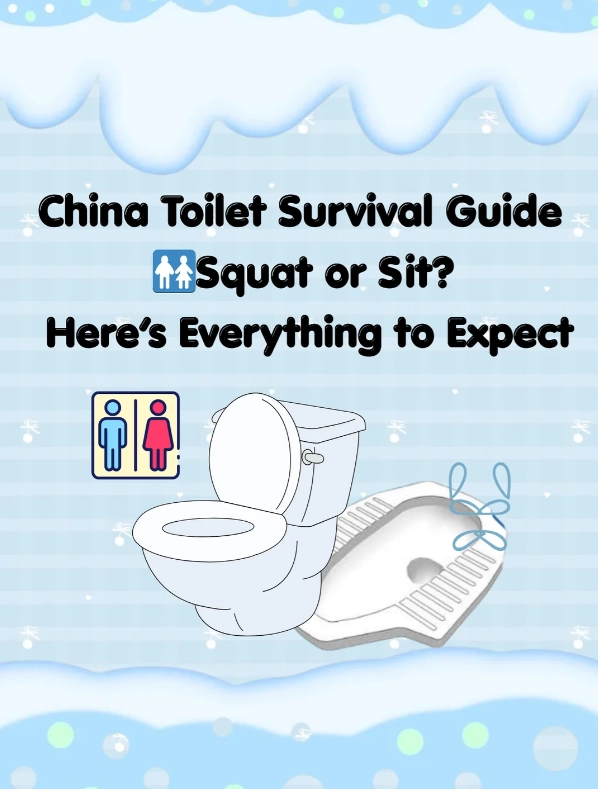
Your Quick Toilet Toolkit
What Exactly Is a Squat Toilet?
Forget everything you know about sitting. A squat toilet, or "Asian-style" toilet, is a porcelain fixture set into the floor. It looks like a shallow trough with footpads on either side and a hole at the back. There's no seat, no tank, just a direct path downward. The first time you see one, it might seem primitive. I had a client from Texas who called it "a porcelain glory hole to the abyss." But there's logic here. Many Chinese people prefer them for hygiene—you're not sharing direct contact with a public seat. Some health studies, like those referenced by the Chinese Center for Disease Control and Prevention, even suggest the squatting position is more natural for elimination. Whether you buy into that or not, your job is simply to use it effectively.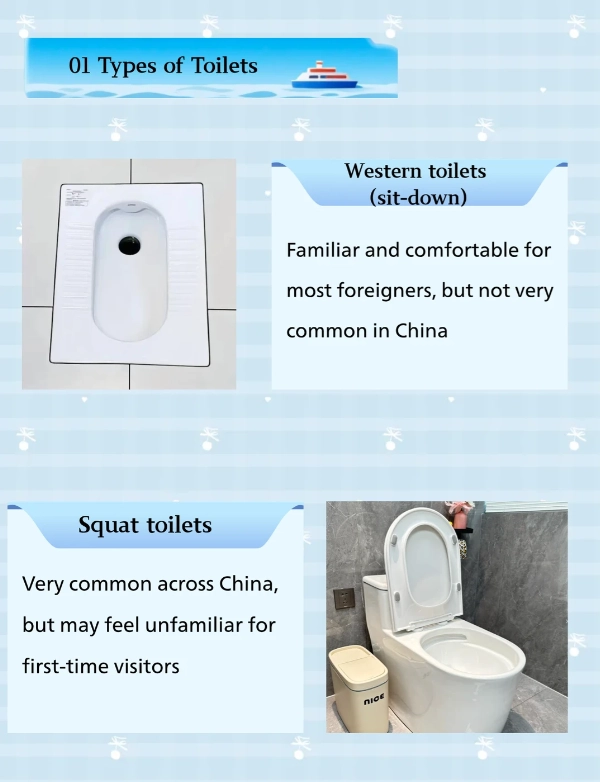
Pro Tip: Don't call it a "hole in the ground" in a dismissive tone. It's a cultural norm. I simply explain it to my groups as "the floor model" versus "the seated model." A little respect goes a long way.
How to Use a Squat Toilet: A Step-by-Step Guide
This is where people psych themselves out. It's simpler than it looks. I've walked countless nervous travelers through this mentally. Let's break it down.
The Pre-Entry Checklist
Before you even enter the stall, do this. Check for toilet paper. Assume there is none. Check the lock. Many doors are flimsy. Do a visual scan for the flush mechanism—it's usually a button on the wall or a pedal on the floor. Have your pack of tissues and hand sanitizer ready in your pocket, not buried in your backpack.
The Maneuver
Okay, you're in. Here's the drill I teach:
1. Position your feet squarely on the raised footpads. They're there for a reason—to keep you out of any potential splash zone. Face the hooded end (the part that looks like a dome).
2. Lower your pants to your ankles or knees. This is the tricky part for those wearing tight jeans or a complicated harness of travel gear. Wear pants that are easy to manage. I cannot stress this enough.
3. Squat down. Keep your back as straight as you can, and find your balance. It's like doing a deep squat at the gym, but less graceful. If balance is an issue, you can lightly brace a hand on the wall in front of you (mind the dirt!).
4. Do your business. Aim is important. For men, stand closer to the hole. For everyone, the goal is the center.
5. Flush. Find that button or step on that pedal. Some are powerful, so stand back a bit.
6. Exit and wash up. Use your own tissue. Deposit used tissue in the waste bin next to the toilet, never in the bowl. The plumbing systems in many older buildings aren't designed to handle paper and will clog instantly. This is the golden rule.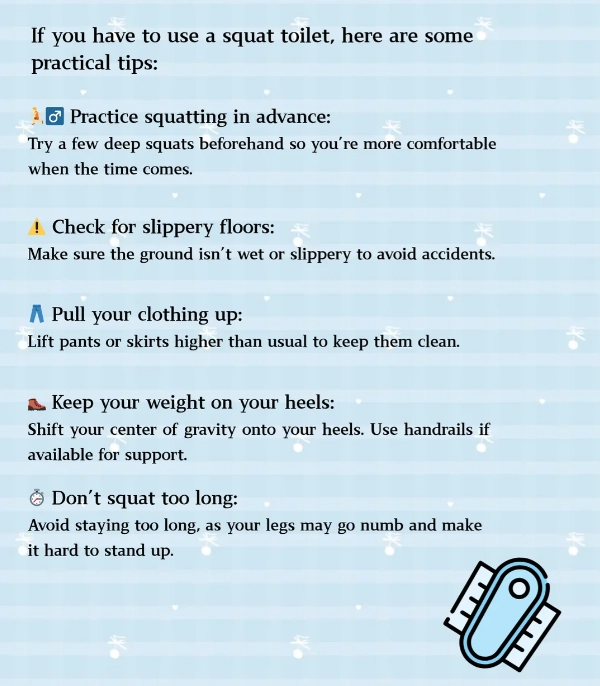
My Non-Negotiable Bathroom Kit
- Travel Pack of Tissues: Multiple packs. Stash them in every bag, every jacket pocket.
- Alcohol-Based Hand Sanitizer: Minimum 60% alcohol. Small bottle on a carabiner clipped to your daypack.
- Small Ziploc Bags: For carrying out used sanitary products if you're in a remote area with no bins.
- Slip-On Shoes: Not lace-up boots. You'll thank me when you're in a hurry.
Finding Toilets & The Eternal Paper Quest
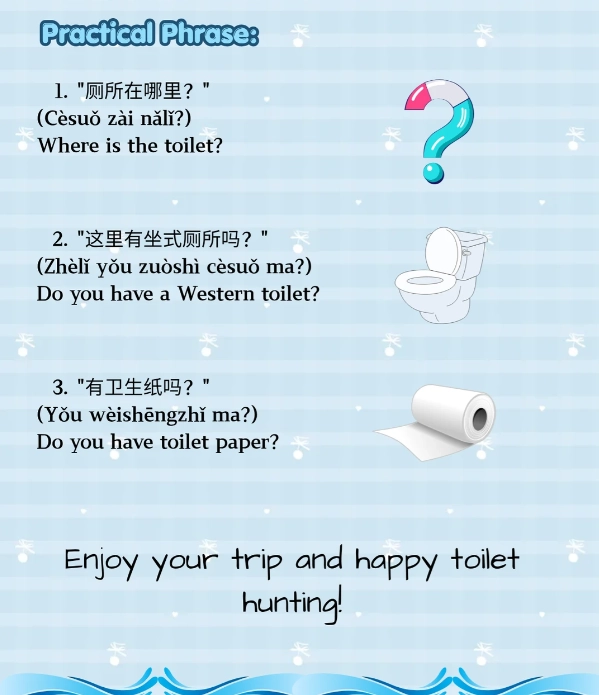
You won't find signs that say "Restroom" or "WC" everywhere. Look for these Chinese characters: 厕所 (cèsuǒ) or 卫生间 (wèishēngjiān). In public parks, train stations, and near tourist sights, there are usually public toilet blocks. Their cleanliness varies wildly. A general rule I've observed: the closer to a major tourist ticket office, the better maintained it tends to be.
The paper situation is a universal truth: public toilets rarely supply it. Even in some nicer malls or restaurants, the dispenser on the wall might be empty. This is why your personal tissue stash is your most valuable possession. I once had a group at the Summer Palace, and the only toilet paper vendor for miles had sold out. My prepared clients were heroes that day.
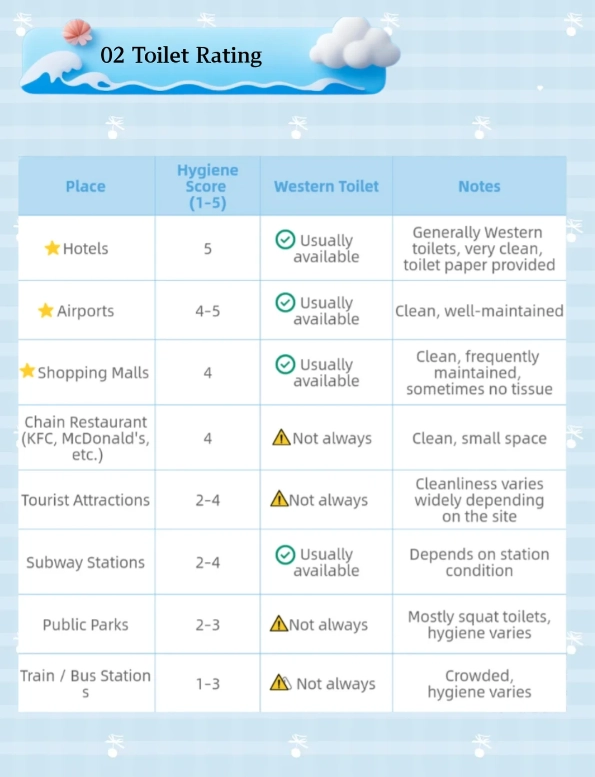
Where can you reliably find toilet paper and sit-down toilets?
- Western Hotel Chains: Your room, the lobby bathrooms. Always pristine.
- Upscale Shopping Malls: Think Plaza 66 in Shanghai, Taikoo Li in Chengdu. The bathrooms are often luxurious.
- International Fast-Food Chains: McDonald's, KFC, Starbucks. They usually have paper and are often sit-down. Consider them emergency service stations. (Buy a cheap coffee if you want to be polite).
- Modern Airport Terminals & High-Speed Rail (G-train) Stations: These are generally excellent, with both options available.
Non-Negotiable Hygiene Tips
This is the part that keeps you healthy. I'm not a doctor, but I've kept hundreds of travelers stomach-bug-free with these rules.
Hand Sanitizer is Your Best Friend. Use it every single time, even if you just touched the door latch. Many public toilets have sinks, but the soap is often a ghostly memory. Carry your own.
The "No Touch" Policy. Try to use your elbow, foot, or a piece of tissue to open doors, push flush buttons, and turn taps. It feels paranoid until you see the state of some handles.
Manage Your Belongings. Never put your backpack or purse on the wet floor. Hang it on the door hook if there is one, or wear it on your front in a crowded stall. I've seen phones take a fatal dive.
Footwear Matters. Wear closed-toe shoes in public bathrooms. Just trust me on this.
For a deeper dive on public health hygiene, the World Health Organization has great general guidelines that align perfectly with travel needs.
Where to Find Western Toilets (Your Safe Havens)
You will encounter sit-down toilets. Here’s the lay of the land:
Hotels: All mid-range to luxury hotels have them. Even some budget hostels now offer a mix.
Fine Dining Restaurants: If you're paying a premium for a meal, the bathroom usually matches.
Newer Buildings & Attractions: Museums built in the last 15 years (like the Shanghai Museum), modern art districts, and new subway lines often have a mix or even predominantly Western styles.
A Crucial Warning: Even when you see a sit-down toilet in a public place, inspect it first. Some people, out of habit or hygiene concern, will squat on top of the rim of a Western toilet. This leads to... footprints. I always check for footprints before I sit. If you see them, either find another stall or meticulously clean the rim. I carry disinfectant wipes for this exact scenario.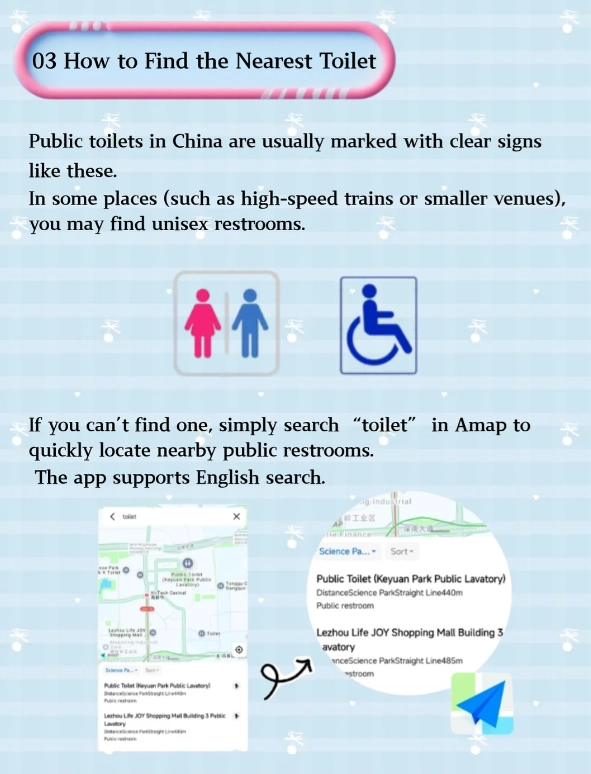
Your Burning Toilet Questions Answered
This is a very common concern. First, actively seek out the safe havens I mentioned above—hotels, malls, fast-food chains. Plan your bathroom breaks around visits to these locations. Second, many modern public toilets in cities now have at least one "accessible" stall with a sit-down toilet and handrails. Look for the universal access symbol. If you're on a tour, tell your guide (someone like me!)—we know every accessible toilet on our route.
Most are free now. The era of the elderly attendant collecting a few mao at the door is largely over in cities. You might still encounter it in some very remote rural areas or certain older parks. Always have a few small denomination coins (1 yuan) in a separate pocket just in case. It's more of a curiosity now than a standard.
The lack of water in the U-bend of squat toilets (it's a direct drop) means there's no water seal to block sewer gases. In poorly maintained or heavily used toilets, this can be pungent. My trick? Breathe through your mouth, not your nose. Get in, do what you need to do, and get out. A dab of menthol balm (like Tiger Balm) under your nostrils can work wonders in a pinch—a trick I learned from a doctor client.
This is a real challenge. For toddlers, consider a portable travel potty seat that fits over a squat toilet, giving them a smaller hole to aim for. For infants, carry a massive supply of disposable changing pads and plastic bags. Family restrooms are increasingly common in large malls and airports—use them when you find them. The key is planning: never let the need become urgent before you start looking. Always use the hotel bathroom right before you leave for the day.
Yes, dramatically. In cities, you have options and modern facilities are common. In rural areas and on some hiking trails (like parts of the Great Wall away from restored sections), you may encounter true pit latrines—a wooden shack over a deep pit. The hygiene rules become even more critical. Pack extra everything—tissue, sanitizer, wipes. Sometimes, the most scenic view comes with the most basic facilities. It's part of the trade-off. I always scout the bathroom situation on any rural itinerary I plan.
 Look, mastering the toilet situation is the ultimate travel hack for China. It removes a layer of stress you didn't even know was weighing on you. It lets you focus on the incredible food, the mind-blowing history, and the genuine warmth of the people. Pack your tissues, wear sensible shoes, and embrace the squat. You've got this.
This guide is based on my firsthand experience guiding travelers across China for over ten years. Details have been fact-checked against current travel norms and infrastructure.







No comments yet.