 Ling Wu
Let’s get the big question out of the way first. After a decade of guiding families, solo travelers, and everyone in between from Shanghai to Sichuan, my answer is a resounding yes, China is overwhelmingly safe for tourists. Violent crime against visitors is extremely rare. You can walk around most city centers at night feeling safer than in many Western capitals.
But—and this is the crucial part—safe doesn’t mean scam-free. The real challenge for tourists isn’t personal safety; it’s navigating the occasional, cleverly designed financial trick aimed at separating you from your money with a smile. Think of it like this: you’re extremely unlikely to get mugged, but you might accidentally pay $100 for a cup of tea if you’re not clued in.
This guide isn’t meant to scare you. It’s the opposite. My goal is to give you the same briefing I give my clients before we hit the streets, so you can relax and enjoy this incredible country with your eyes wide open. Knowledge is your best defense.
What's in This Guide?
How to Spot and Avoid Common Tourist Scams in China
These are the classics. I’ve seen every single one play out, sometimes successfully, often not when I’m around to intervene. Memorize this shortlist.
The "Friendly" Student/Tea Ceremony Scam
This is the number one scam in Beijing and Shanghai, especially around Tiananmen Square, Wangfujing, and the Bund. A well-dressed, articulate young person or couple approaches you. Their English is excellent. They want to practice, or they’re art students inviting you to a show. After charming chat, they suggest going to a "traditional tea house" they know.
You go, you’re served tea and maybe snacks. Then the bill comes. It’s for 500, 800, even 1500 RMB (that’s $70 to $200+). The menu had no prices. Suddenly, your new friends are gone or claim they have no money. The staff becomes intimidating.
How to avoid it: Politely but firmly decline any invitation to a tea house, art studio, or bar from a stranger on the street. A simple "No, thank you" and walking away works. Genuine students won’t be offended. If you want a tea experience, book one through your hotel or a reputable tour company.
The Fake Taxi & The Meter Switch
There are two versions. First, the outright fake taxi: a regular car with a fake light on top, often lurking at airports or train stations. They’ll quote a fixed price 3-4 times the normal rate. The second is more subtle: a real taxi where the driver hits a hidden switch, making the meter jump insanely fast. I had a client whose 50 RMB ride suddenly cost 250.
How to avoid it: At airports and major stations, always use the official taxi queue. Look for the line of people and the uniformed attendant. Never get in a car that solicits you. For regular hails, use Didi (China’s Uber, works with an international number) or Meituan. The app sets the price and route upfront. In a real taxi, if the meter seems to be sprinting, note the license number and vehicle plate, ask to stop, pay what seems fair, and get out. Report it via the receipt.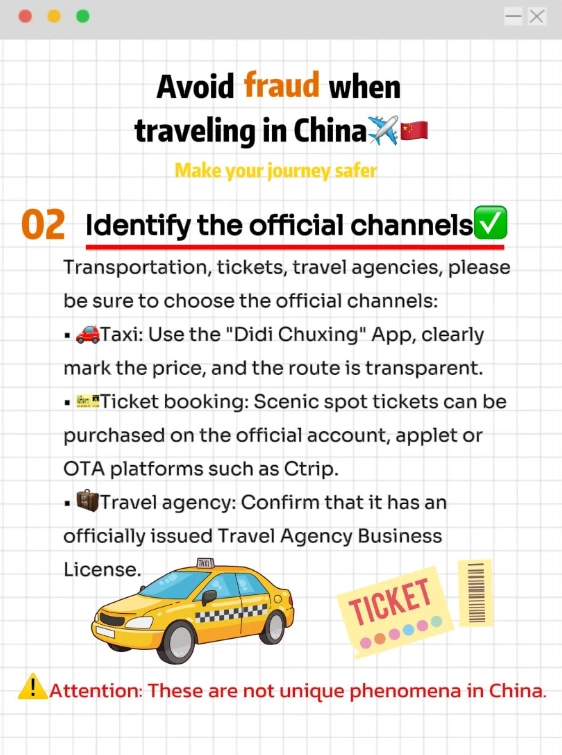
The "Art Student"/"Free" Souvenir Scam
Similar to the tea scam but with a physical item. Someone approaches you near a tourist site, claims to be an art student, and gives you a small "free" souvenir like a bracelet or a painted stone. Once it’s in your hand, they demand payment, often aggressively, claiming it’s for their "school" or "exhibition."
How to avoid it: Do not accept anything put into your hand. Keep your hands in your pockets if someone is being overly friendly with trinkets. If something is placed on you, immediately remove it and hand it back, saying "Bu yao" (don’t want).
The "Your Hotel is Closed/Booked" Ruse
This happens mainly when arriving late at a transport hub. A "helpful" person, sometimes even in a semi-official looking vest, tells you your pre-booked hotel has flooded, burned down, or is overbooked. They insist they can take you to a "better," "government-approved" hotel. Of course, it’s a terrible place that pays them a huge commission.
How to avoid it: Ignore them completely. Have your hotel’s address in Chinese on your phone. Use the official taxi queue. Call your hotel directly if you’re worried. Reputable hotels almost never suddenly close without contacting you if they have your booking info.
Pro Tip from a Guide: Scammers look for uncertainty. Walk with purpose, even if you’re lost. Pull out your phone and look at a map app rather than staring at a paper map with a confused expression. That confident posture alone makes you a less appealing target.
Essential Safety Tips for Your China Trip
Beyond avoiding scams, here’s your toolkit for a smooth, safe journey.
Money and Belongings
China is largely a cashless society, but for tourists, a mix is best. Use Alipay or WeChat Pay where you can (setting them up requires some effort). For everything else, use a credit card with no foreign transaction fees. Carry a modest amount of cash (maybe 500 RMB) for small markets or places that don’t take cards.
Pickpocketing exists in crowded areas like the Beijing Subway at rush hour, Shanghai’s Nanjing Road, or tourist temples. Use a cross-body bag with the zipper facing you. Men, don’t keep your wallet in your back pocket. In crowds, wear your backpack on your front. It looks silly, but I do it when it’s packed.
Health and Hygiene
Tap water is not for drinking, not even for brushing teeth in some older buildings. Use bottled water. Street food is generally safe if you see a high turnover. Look for stalls with a queue of locals. I’ve eaten at Wangfujing Snack Street for years without issue. But if your stomach is sensitive, maybe skip the deep-fried scorpion.
Carry tissues and hand sanitizer. Many public restrooms, especially at attractions outside major cities, may not provide toilet paper. The squat toilet is still common—consider it part of the cultural immersion!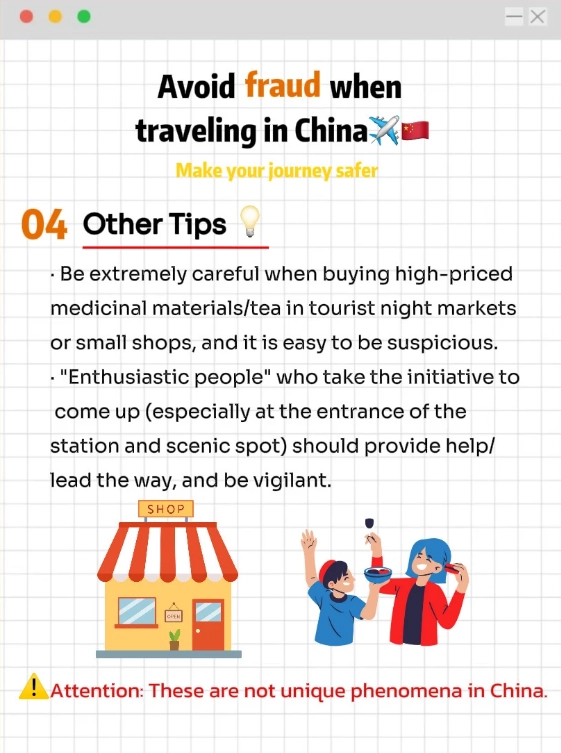
Communication and Emergencies
Download a VPN before you arrive. Google Maps, Gmail, WhatsApp, and Instagram don’t work without one. For maps, use Apple Maps (it works surprisingly well in China) or Baidu Maps. Have your hotel’s business card with you at all times.
The universal emergency number in China is 110 for police. For medical emergencies, it’s 120. For fire, it’s 119. It’s a good idea to have these saved in your phone. Major hospitals in big cities have international clinics.
A Personal Note on Crowds: During national holidays (like the first week of October), popular sites are not just busy—they are dangerously overcrowded. I once spent an hour being carried by a human tide at the Forbidden City exit with no control over my movement. Avoid domestic travel peaks if you can. If you can’t, go to sites at opening time or the last entry slot.
Navigating Transportation Safely
| Mode of Transport | Safety Level | Key Tips & How to Avoid Pitfalls |
|---|---|---|
| Metro/Subway | Very High | Extremely safe, cheap, and efficient. Beware of rush-hour crowds (7-9am, 5-7pm) for pickpockets. Buy tickets from machines (English option) or use a transport card. All signage is bilingual. |
| Official Taxis | High | Use the official queue. Ensure the meter is started. Have your destination written in Chinese. Keep the receipt—it has all the driver’s info if you leave something behind. |
| Didi (Ride-Hailing) | Very High | The safest option. Price and route are locked in. You can share your trip with a friend. Use the English app interface. Pay via the app. |
| Long-Distance Trains | Very High | Fantastically safe and comfortable. Book in advance via Trip.com. Keep your passport handy for ticket checks. Watch your luggage on overhead racks. |
| Intercity Buses | Moderate to High | Generally safe but can be less comfortable. Not recommended for very long distances. Use reputable stations. Be aware of your belongings. |
On any form of transport, a simple rule: if your luggage is out of your direct eyesight, loop a strap around your leg or the seat. I’ve never had anything stolen, but I’ve seen the opportunity arise.
Your China Safety Questions, Answered
China is an astonishing country to explore. The vast majority of people you meet will be genuinely helpful, curious, and friendly. The scams exist in a few tourist hotspots, but they are predictable and avoidable. Arm yourself with the knowledge in this guide, stay aware of your surroundings, and you're set for an incredible, safe adventure.
This article is based on first-hand, on-the-ground experience guiding tourists across China for over ten years.








No comments yet.