 Ling Wu
What You'll Find Here
Let me paint you a picture: I'm standing at the base of Yellow Crane Tower at 6:30 AM, sweat already forming on my brow. The ticket booth isn't even open yet. Twelve tourists from Germany are already lined up behind me, all hoping to get that perfect shot without a sea of selfie sticks. Here's the catch — if you show up at 10 AM like most guidebooks suggest, you'll be battling hundreds of other photographers. So when should you go, and where exactly should you point your lens?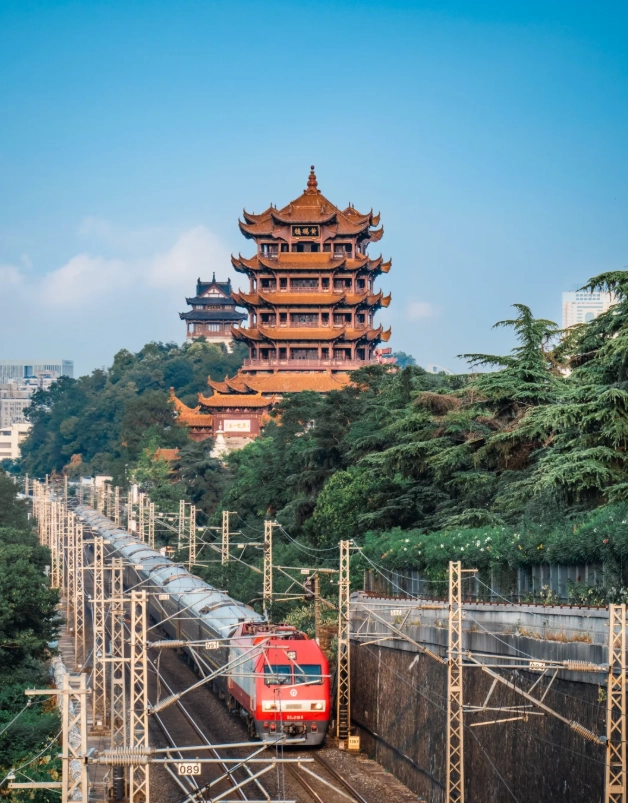
When to Shoot for Stunning Photos
After leading dozens of photography-focused tours, I can tell you this: the best lighting happens within 90 minutes of sunrise and 60 minutes before sunset. But there is a twist. The tower faces east, so morning light hits the front directly. Evening light comes from behind, creating silhouettes. Which one is better? It depends on the look you want.
Sunrise Magic (5:30 AM – 7:00 AM in summer)
The park opens at 7:00 AM (summer) or 7:30 AM (winter), but the area around the east gate is accessible even earlier. I recommend arriving at the Jie Fang Road (解放路) entrance by 6:30 AM. The golden light paints the tower's yellow glazed tiles in warm tones. The best spot is the small pavilion on the hill southwest of the tower. From there, you can frame the tower against the rising sun with the Yangtze River in the background.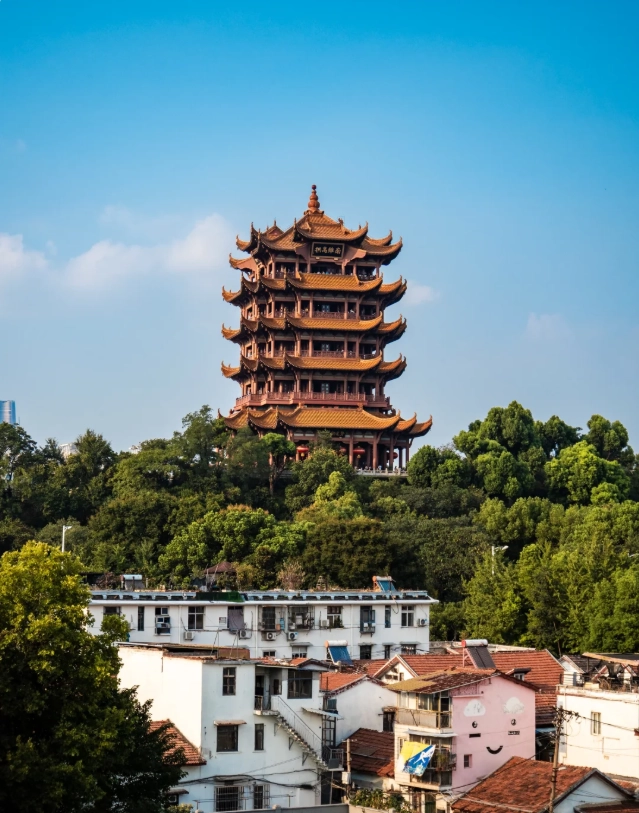
Sunset & Blue Hour (4:30 PM – 6:30 PM)
The tower closes at 6:00 PM (October–April) or 6:30 PM (May–September), but you can stay on the grounds until 7 PM. For sunset, walk to the northwest corner of the ground, near the bell tower. The sun sets behind the modern city skyline, creating a stark contrast. Bring a tripod — by 5:30 PM, the light drops fast, and you'll need a long exposure to capture the tower's reflection in the small pond.
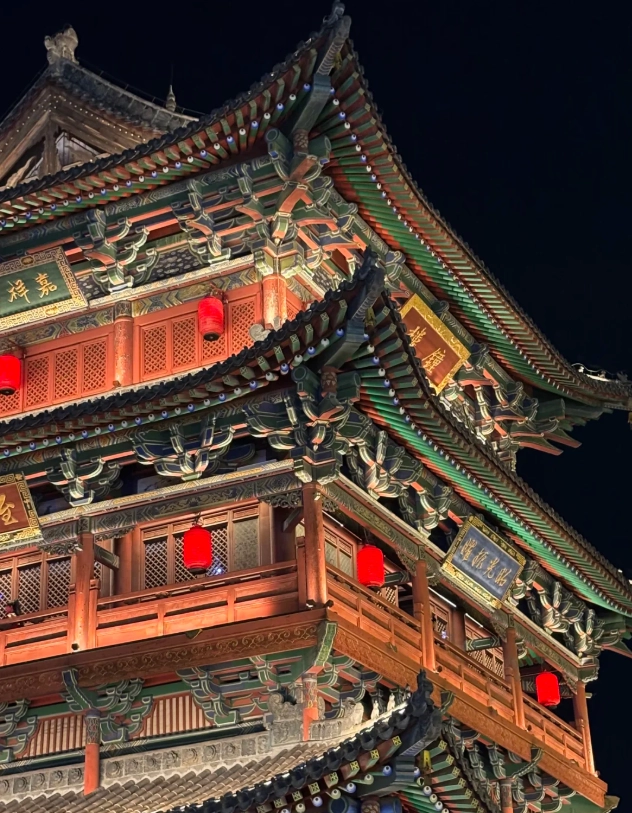
I always tell my clients: avoid the noon hours (11 AM – 2 PM). The light is harsh, the shadows are unflattering, and the crowds peak. If you can only go during midday, focus on detail shots — the carved roof beams, the bronze incense burner, the red lanterns under the eaves. Those can be stunning.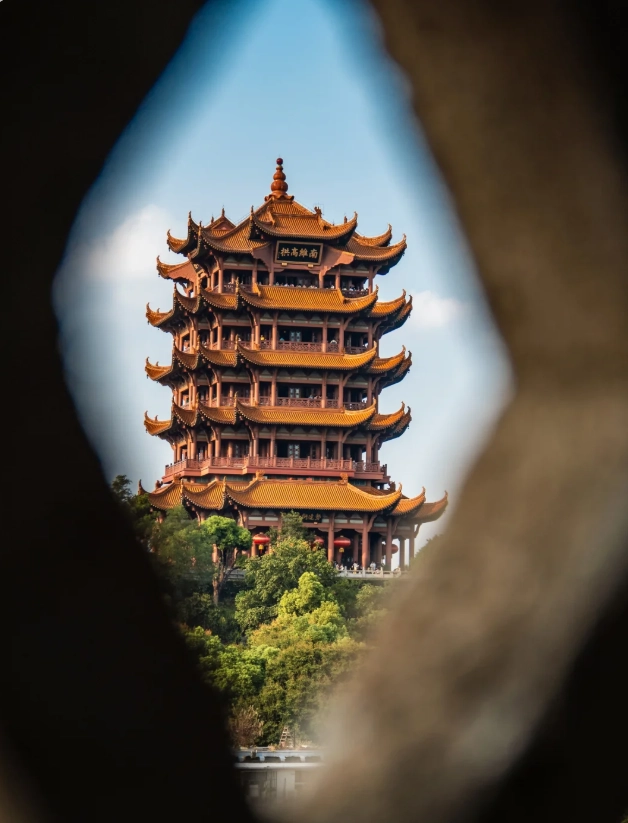
Top Photography Spots Around the Tower
By the way, don't just shoot the tower itself. The complex has several hidden angles that most tourists miss. Here are my go-to locations, ranked by popularity among serious photographers.
| Spot | Best For | Location Details | Time of Day |
|---|---|---|---|
| The Eastern Stairs (东梯) | Leading lines, symmetrical composition | Approach from the main entrance, climb the first flight then look back | Morning (8–10 AM) |
| The Bell Tower Pavillion | Framing the tower through traditional architecture | Northwest corner of the complex, next to the large bell | Late afternoon (4–5 PM) |
| The South Wall Garden | Reflection shots in the pond, especially after rain | South side, follow the path past the tea house | Morning or golden hour |
| Top Floor (5th level) | Panoramic view of Wuhan and the Yangtze River Bridge | Climb all the way up — yes, stairs only, no elevator | Sunset (but crowded, arrive 30 min early) |
| The White Cloud Pavilion (白云阁) | Elevated view, less crowded, good for portraits | About 200m west of the main tower, on a small hill | Any time, best in mid-afternoon |
My personal favorite is the South Wall Garden after a light rain. The wet stones reflect the tower beautifully, and you can get a perfectly symmetrical shot if you crouch low. Most photographers don't bother because the pond is small, but that's exactly why it works — no one is in your frame.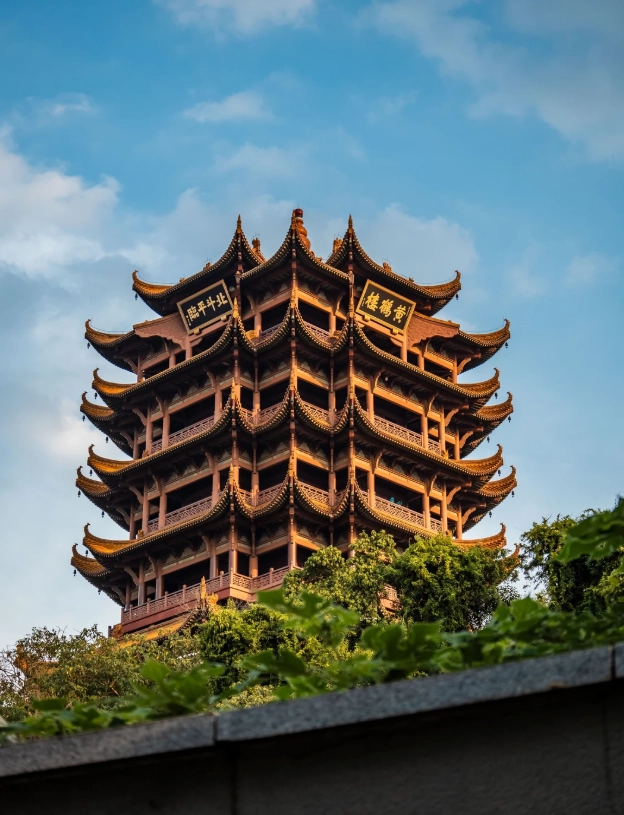
Night Photography & The Light Show
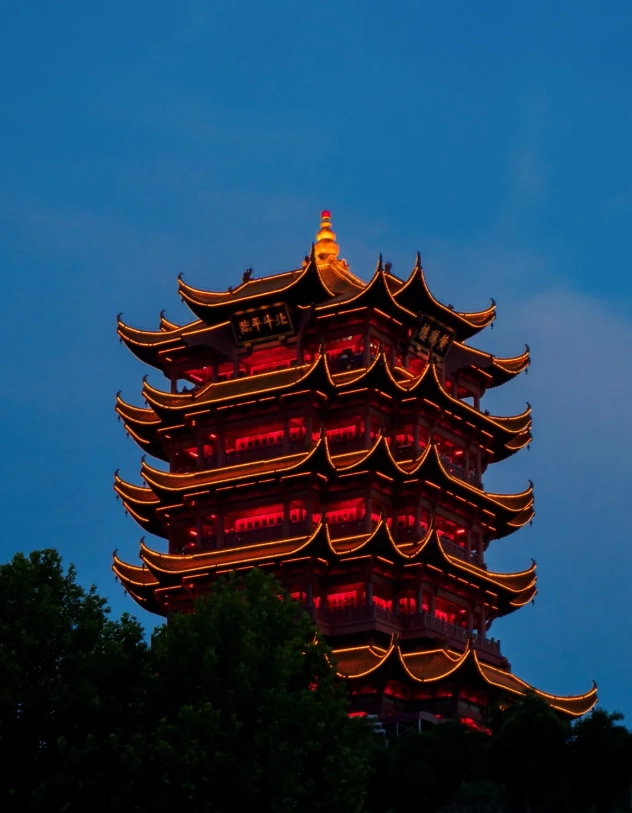
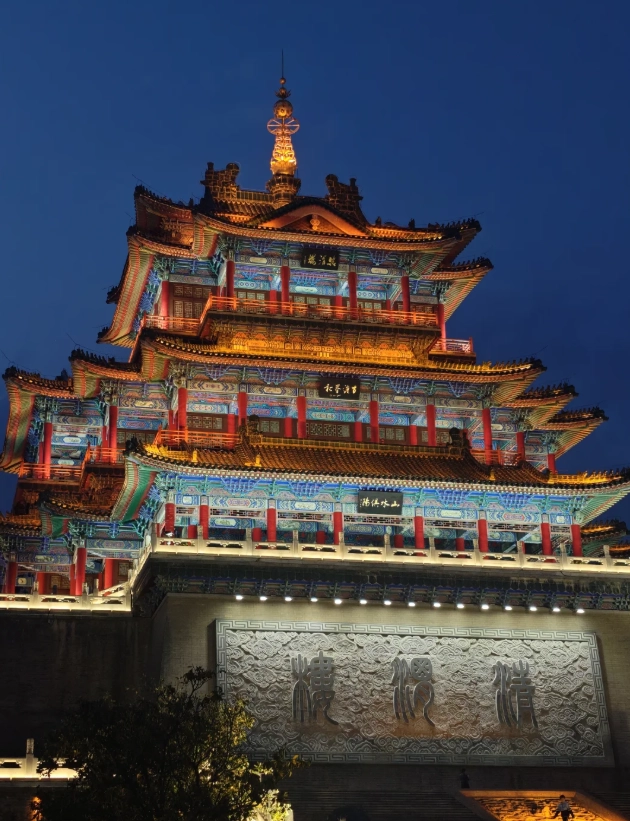
Yes, you can photograph the tower after dark! From May to October, the tower is illuminated from 7:30 PM to 9:30 PM. But here is the thing: you cannot enter the tower grounds after closing. So where do you shoot from? I've tested these spots:
- The Yellow Crane Tower overlook on the Yangtze River Bridge. Walk to the pedestrian path on the bridge, about 300 meters from the tower. You'll be shooting from above, with the tower lit against the dark sky. Use a telephoto lens (70-200mm) to compress the distance.
- Shouyi Road (首义路) intersection. About 800m south. You can frame the tower with passing car light trails. I got my best long-exposure shot there: 3-second exposure at f/8, ISO 100.
- Right outside the main entrance gate. Even though the park is closed, the facade is still lit. Position yourself near the ticket booths, use a wide lens, and include the red lanterns in the foreground.
Practical Tips: Tickets, Crowds & Gear
Ticket details (in 2024):
| Adult (peak season) | 80 RMB (about $11) |
| Adult (off-peak) | 65 RMB |
| Student / Senior (60+) | 40 RMB (must show passport) |
| Child (under 1.2m) | Free |
Must book online. The queue for on-site tickets can take 30 minutes. I use the WeChat mini-program (搜“黄鹤楼”) or Trip.com (formerly Ctrip). Show the QR code on your phone — no printing needed.
Best time to avoid crowds: Weekdays before 9 AM. Weekends are a zoo. If you must go on a weekend, target the last entry slot (4:30 PM) — they stop selling tickets 30 min before closing, but you can still wander for an hour with fewer people.
Gear recommendations: A wide-angle lens (16-35mm) is essential for the tower's full height. A prime 50mm is great for details. Tripod is useful but may be restricted during peak hours — security sometimes asks you not to set it up on the stairs for safety reasons. If you're polite and show them your camera, they'll usually let you. I always bring a polarizer filter — the sky often has haze, and the filter cuts through it nicely.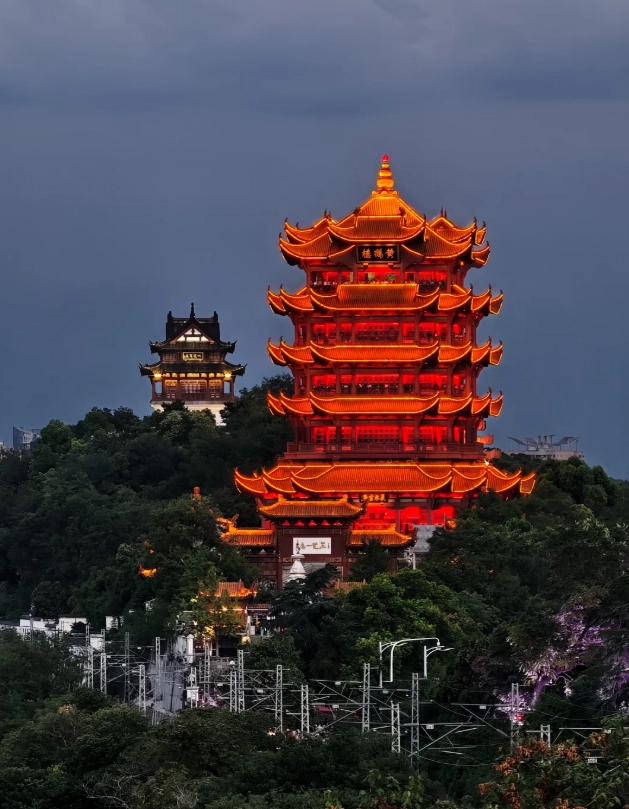
Transportation to Yellow Crane Tower
Metro: Line 5, get off at Sijiaokou (司门口黄鹤楼站), Exit A. Walk 5 minutes east. Alternatively, Line 4 to Fuxing Road (复兴路站), Exit C, then walk 10 minutes north.
Bus: Routes 10, 61, 401, 402, 806 — get off at Huanghelou (黄鹤楼) stop.
Taxi/DiDi: Show the driver these Chinese characters: 黄鹤楼. The drop-off point is usually at the south gate (南门). There's less traffic there compared to the main east gate.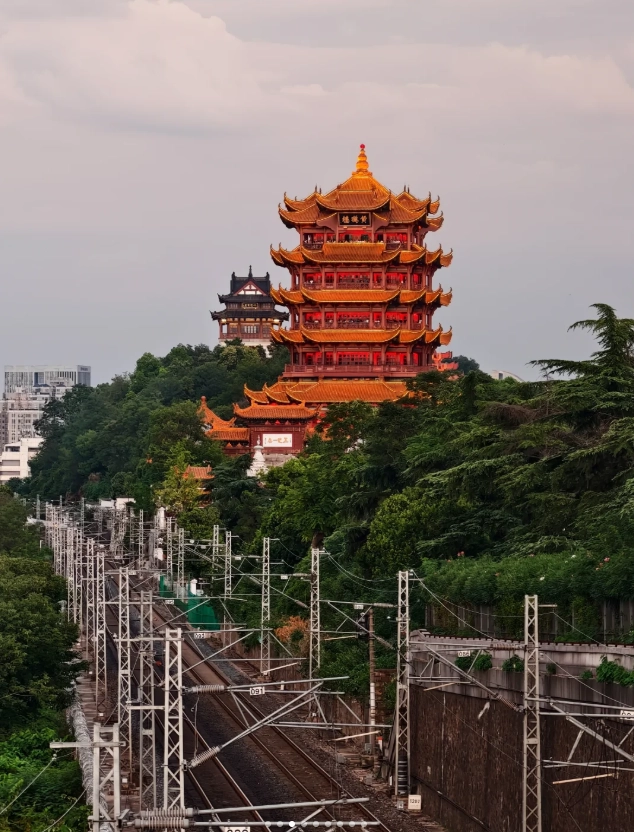





Incredible experience. I was worried about the weather, but a light drizzle actually worked in my favor — the wet cobblestones reflected the tower beautifully. The best time? Right after a rain shower when the clouds start breaking. I got a shot from the Moon Viewing Pavilion with the tower framed by cherry blossom branches (in March). No crowds, pure serenity. I'd give it ten stars if I could. Bring your widest lens and a rain cover for your gear. Absolutely worth every yuan.
Best photo spot in Wuhan, hands down! The trick is to go around 3pm on a clear autumn day. The light filters through the trees on the west side and casts this warm glow on the tower. I used a polarizer to cut the haze, and the contrast between the blue sky and red pillars is unreal. Also, the little pagoda near the entrance makes a great foreground element. I've been three times now and keep finding new angles. Five stars — a photographer's paradise.
Absolutely magical! I arrived just before sunrise (around 5:30am) and had the entire east viewing deck to myself. The mist rolling off the Yangtze River combined with the first rays hitting the yellow tiles — pure photography gold. My favorite angle is from the southern staircase looking up through the overhanging branches. Bring a telephoto lens for close-ups of the eaves. I shot over 200 frames in two hours. Cannot recommend this enough for anyone serious about landscape or architecture photography.
Pretty good spot overall, but not mind-blowing. I got some nice shots from the west gate area around 4pm when the light was soft. The tower itself is photogenic, but the modern buildings in the background kinda ruin the 'ancient' vibe. Also, the ticket price felt a bit steep for what you get — you can see most of the tower from outside for free. If you're just after a quick snap, it's fine. But for a dedicated photography trip, I'd say it's a solid 4 out of 5.
I went hoping to capture the iconic tower at golden hour, but the crowds were insane. Even on a weekday, the main viewing platform was packed elbow-to-elbow, and I could barely set up my tripod without bumping into someone. The best angle I found was from the Snake Hill side, but you have to push through a narrow path. For the time, sunset is beautiful but you'll fight for space. If you're a serious photographer, go at 7am or don't bother. Honestly, a bit disappointed given the hype.