 Tao Xu
Skip Ahead
I've led this walk at least fifty times. And every single time, someone asks: "Are you sure we can walk from the tower to that bridge?" Yes. Absolutely. And it's one of the most underrated urban walks in China.
The distance is only about 1.5 kilometers. But between the ancient poetry of Yellow Crane Tower and the roaring traffic of the Wuhan Yangtze River Bridge, there are a dozen small details that most guides never mention. Here is what I've learned from sweating under the summer sun and shivering in winter drizzle.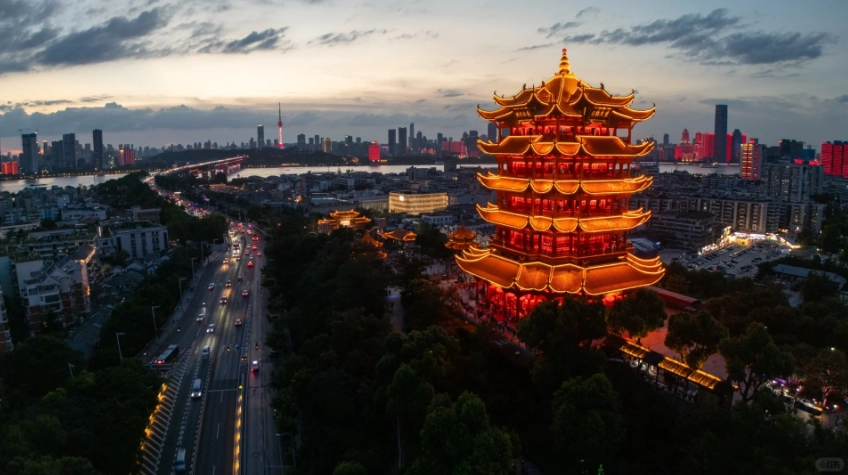
Why walk from Yellow Crane Tower to Wuhan Yangtze River Bridge?
Because it connects two icons of Wuhan in under an hour of walking. The tower is ancient (rebuilt many times, but the vibe is real). The bridge is a marvel of 1950s engineering — the first double-deck road-rail bridge across the Yangtze. Walking from one to the other gives you a cross-section of Wuhan: history, river life, and the raw scale of the Yangtze.
Plus, it's free after you've already paid for the tower ticket. The route is almost flat. No stairs except those on the bridge itself.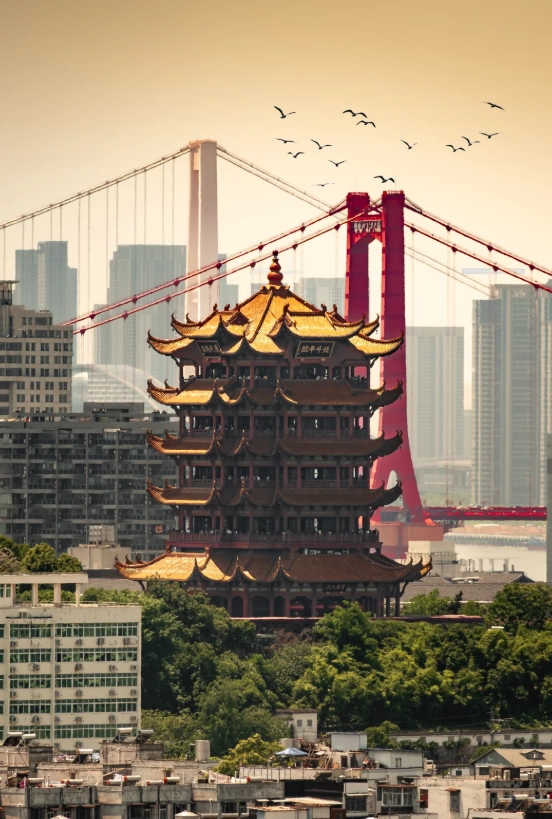
The exact walking path (step by step)
Exit Yellow Crane Tower through the North Gate. You'll see a pedestrian bridge crossing a busy road (Youyi Avenue). Cross that bridge. On the other side, turn right and walk along the riverfront promenade. After about 800 meters you'll reach the base of the Wuhan Yangtze River Bridge. There's a staircase that takes you up to the pedestrian walkway on the upper deck.
| Segment | Distance | Time | Note |
|---|---|---|---|
| North Gate to crosswalk | 100 m | 2 min | Follow the signs to "长江大桥" |
| Pedestrian bridge over Youyi Ave | 50 m | 1 min | Elevators not always working; be ready for stairs |
| Riverfront promenade | 800 m | 10–12 min | Shaded by trees in summer; nice breeze |
| Staircase up to bridge deck | 30 m climb | 3 min | About 60 steps; no escalator |
| Walk on bridge (to center) | 600 m | 8 min | Best photo spot at the central pavilion |
Total walking time: around 25 minutes without stops. But you will stop. The river view is addictive.
Yellow Crane Tower: tickets, timing & how to avoid the crowds
Ticket details
Adult ticket: 70 RMB (about $10 USD). Students with valid ID: 35 RMB. Children under 1.2 meters: free. Seniors 65+ (with passport): free. You must bring your passport — they won't accept a photo. Payment at the gate accepts WeChat Pay, Alipay, and cash (but they often have no change for big bills). International credit cards? Only at the very few ticket machines near the west gate; the main entrance counters rarely accept them. I always tell my guests to bring exact cash or have Alipay ready.
Do you need to book in advance? During national holidays (May Day, October Golden Week, Chinese New Year) — yes, absolutely. Use the official WeChat mini-program "黄鹤楼公园门票预约" (it's in Chinese, so ask your hotel to help). On regular weekends or weekdays, just show up. The queue at the ticket window moves fast — usually under 5 minutes.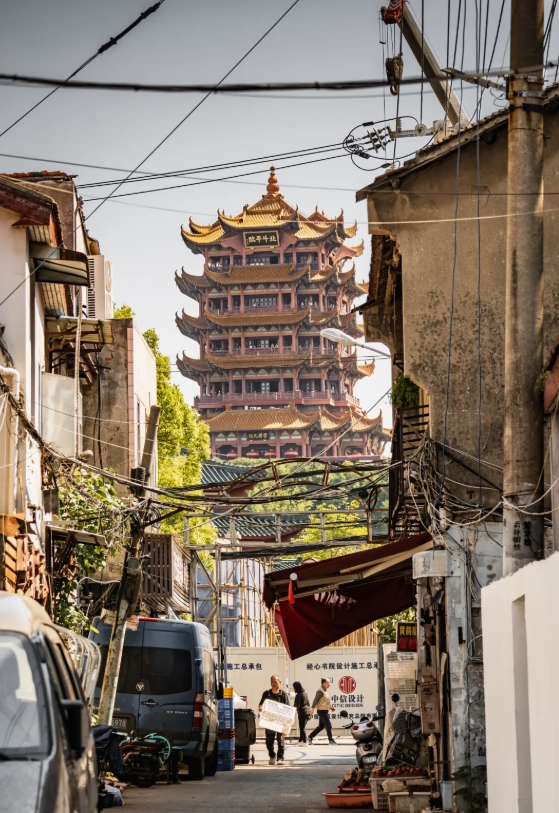
Best time to visit the tower
Open hours: 8:00 AM – 6:00 PM (last entry 5:30 PM, March–November). In winter, closes at 5:00 PM (last entry 4:30 PM). I've made the mistake of arriving at 4:45 PM in December — they let me in but kicked me out before I reached the top. Don't be that guy.
My preferred time: 3:00 PM. The crowds from the morning tour buses have thinned. The sunlight starts slanting, giving a warm glow to the tower's red pillars. You have two hours to explore the tower, the gardens, then walk to the bridge.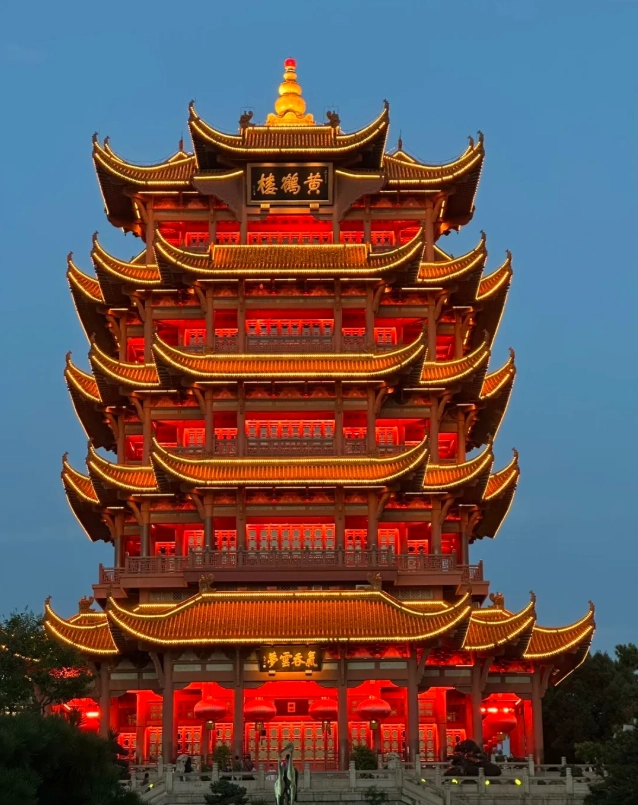
Walking the Wuhan Yangtze River Bridge
Once you're up on the bridge, you'll be on the pedestrian walkway on the upper deck. This is a road bridge — cars and buses whiz by just a few meters away. It's noisy, but that's part of the experience. The railings are about 1.4 meters high, so you can lean and look down at the brown Yangtze rolling beneath.
The bridge is 1.6 kilometers long, but you don't need to cross it entirely. The best part is the central pavilion (a small square building with a traditional roof). From there you get a panoramic view of the river, the TV Tower on the opposite bank, and the city skyline. Most tour groups turn back at the pavilion — so do the same unless you have a specific reason to go to the other side.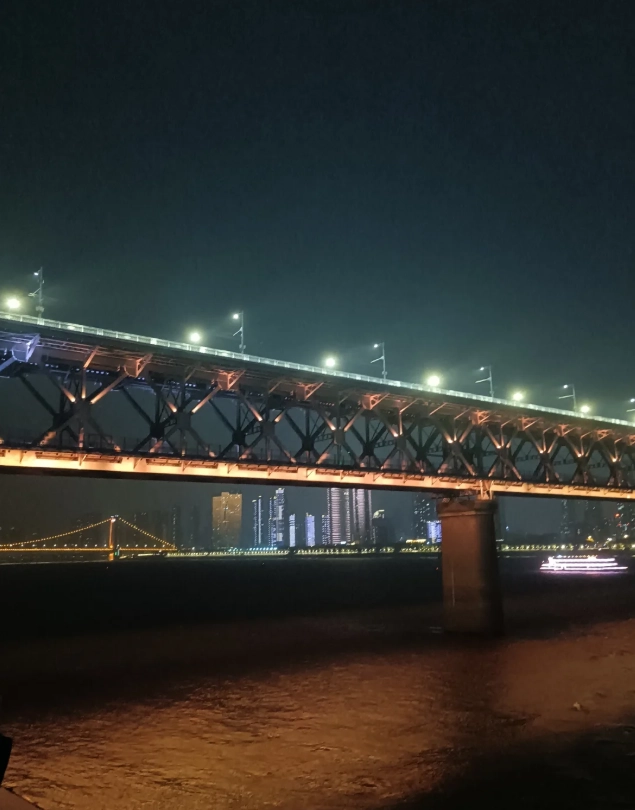
Safety tip: There is a gap between the pedestrian walkway and the road. The gap is covered but uneven in places. Don't look at your phone while walking. I've seen tourists trip. Also, the bridge shakes slightly when a truck passes — don't panic, it's normal.
Crossing the bridge: should you go all the way?
If you walk the full 1.6 km to the south end, you'll arrive at a busy intersection with no direct subway. You'd then need to take a taxi or bus back. My advice: walk to the central pavilion, enjoy the view, then return the same way. The round trip from the staircase to the pavilion and back is about 2 km and takes 30 minutes at a leisurely pace.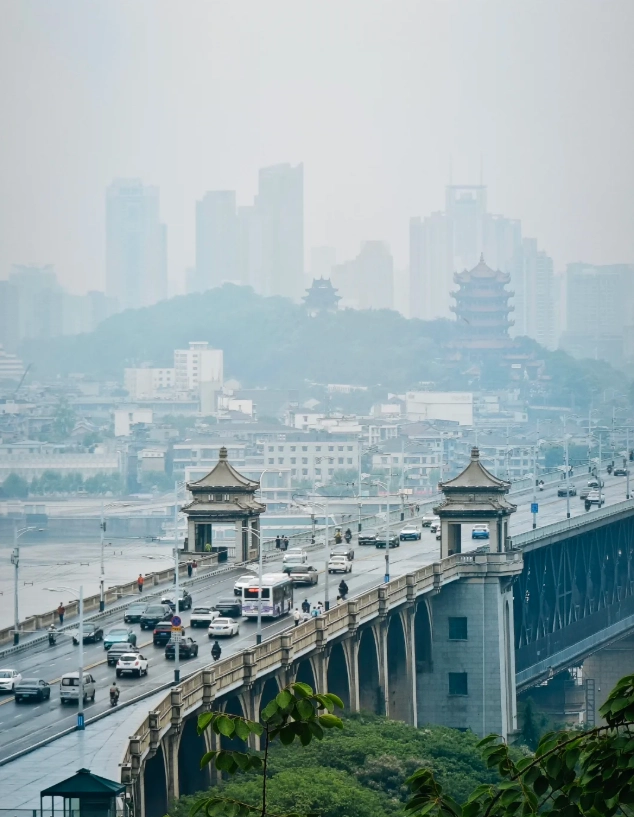
Hidden gems most people miss on this walk
Here are the spots I always point out but rarely see in English blogs:
- The Poetry Corridor: Just inside the north gate of Yellow Crane Tower, there's a covered walkway with stone slabs inscribed with famous Tang dynasty poems about the tower. Most tourists rush past. Pause for 3 minutes — the calligraphy is stunning.
- The Old City Wall remnants: Between the tower and the river, you'll see a short section of ancient brick wall. It's not marked in English. It's part of the old Wuchang city wall. I've stood there many times imagining soldiers peering at the river.
- The riverside fishing spot: On the promenade, near the bridge staircase, local men fish with long poles. They've been coming here for decades. I once chatted with an old man (using Google Translate) who told me the fish taste muddy in summer — he only fishes in autumn.
- The bridge's original steel plates: On the pedestrian deck near the staircase, look for a small plaque (in Chinese) describing the 1957 construction. The steel was imported from the Soviet Union. There's a tiny rusted rivet hole that kids love to touch.
A perfect 3-hour timeline (no rush)
Let me put this together as a real-world example. Imagine you arrive at Yellow Crane Tower south gate at 3:00 PM.
| Time | Activity |
|---|---|
| 3:00 – 3:15 | Buy ticket, enter through south gate |
| 3:15 – 4:00 | Explore main tower (climb to 5th floor), visit Poetry Corridor |
| 4:00 – 4:15 | Walk from north gate through park to river promenade |
| 4:15 – 4:25 | Stroll along promenade, catch the fishing spot |
| 4:25 – 4:30 | Climb staircase to bridge deck |
| 4:30 – 5:00 | Walk to central pavilion, take photos, enjoy sunset light |
| 5:00 – 5:15 | Walk back to staircase and descend |
| 5:15 – 5:30 | Optional: rest at riverside bench or grab a cold drink from a street vendor |
Alternative plan if it's raining: Skip the outdoor promenade and take a taxi from the tower's north gate directly to the bridge staircase (costs about 10 RMB). On the bridge, the pedestrian walkway has a roof in the central section — you can stay dry while still enjoying the view.
Common mistakes to avoid (learn from my guests)
Mistake #1: Using the south gate to exit after the tower. I've seen people walk all the way back down to the main entrance. Don't. The north gate is the exit toward the river. It's not obvious — there's a small sign, but it's in Chinese. Just follow the path northward, away from the ticket booth.
Mistake #2: Visiting the tower and bridge separately on different days. They are literally 15 minutes apart on foot. Combining them saves half a day. I've had guests who booked a separate bridge tour with a guide — that's a waste of money.
Mistake #3: Wearing flip-flops. The bridge deck has a metal surface in some sections that gets scorching hot in summer. And the stairs are steep. Wear closed-toe shoes with grip.
Mistake #4: Expecting the bridge pedestrian path to be quiet. It's a working bridge. Traffic noise is constant. If you want silence, walk early morning (before 8 AM) but then the tower isn't open yet. Compromise: wear earplugs or just embrace the urban buzz.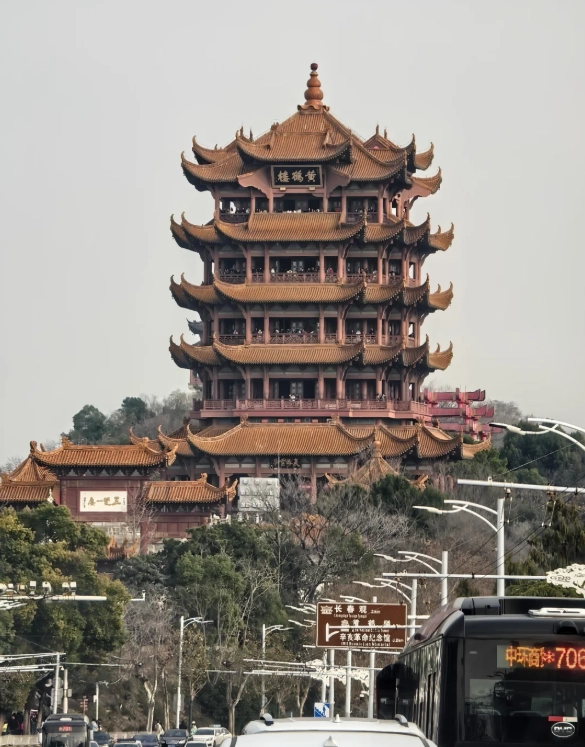





Maybe I hyped it up too much, but I found this walk a bit underwhelming. The path from Yellow Crane Tower down to the bridge is nothing special—just a lot of steps and some tired souvenir stalls. Once you're on the bridge, the traffic noise is constant and the air feels heavy. Plus the tower entry fee is steep for what you get. I'd say just take a taxi across the bridge for the view and save your energy. Not my cup of tea.
Nice walk overall—pretty views of the river and the city. I liked that it wasn't too long, maybe 40 minutes at a relaxed pace. However, there was some construction going on near the bridge entrance, and the signage could be clearer; I almost missed the turnoff. Also it gets quite crowded on weekends. Still a good experience, but not quite perfect. I'd give it a solid 4.
If you're into photography, this is the route to take. The vantage points from Yellow Crane Tower looking down at the bridge are incredible, and as you walk toward the bridge itself you get beautiful silhouettes of the pagoda with the modern skyline behind. The golden hour light made the river look like liquid metal. I filled my memory card in under an hour. Only heads-up: bring a wide lens if you want the full bridge in frame. Totally worth it.
As a history nerd, this walking route was a dream. Yellow Crane Tower itself is steeped in poetry and legend, and then as you walk toward the Yangtze River Bridge—a masterpiece of Soviet-era engineering—you really feel the layers of time. There are a few info boards along the way that explain the significance of each spot. I spent a good two hours just soaking it all in. Highly recommend for anyone interested in Chinese history or architecture.
Honestly one of the most scenic walks I've ever done in China. Starting from Yellow Crane Tower, you get that classic postcard view, then the path gently winds down towards the Yangtze River Bridge. The sunset cast a golden glow over the river and the old town—absolutely magical. The route is well-maintained and easy to follow, and you don't need a guide. If you're visiting Wuhan, don't skip this walk. Five stars without a doubt!